Read Time:

13–19 minutes

Modified Date:

The Zero-Click Search Era: How to Win Without Getting the Click

More than half of all Google searches now end without a single click. Users get their answer directly on the results page, from featured snippets, local packs, or AI-generated summaries and move on without visiting any website.

This shift changes what SEO success looks like. Ranking well no longer guarantees traffic, but it can still build visibility, trust, and brand recognition that drives business outcomes. This guide covers how to optimize for zero-click SERP features, measure success beyond clicks, and turn search visibility into real results even when users never reach your site.

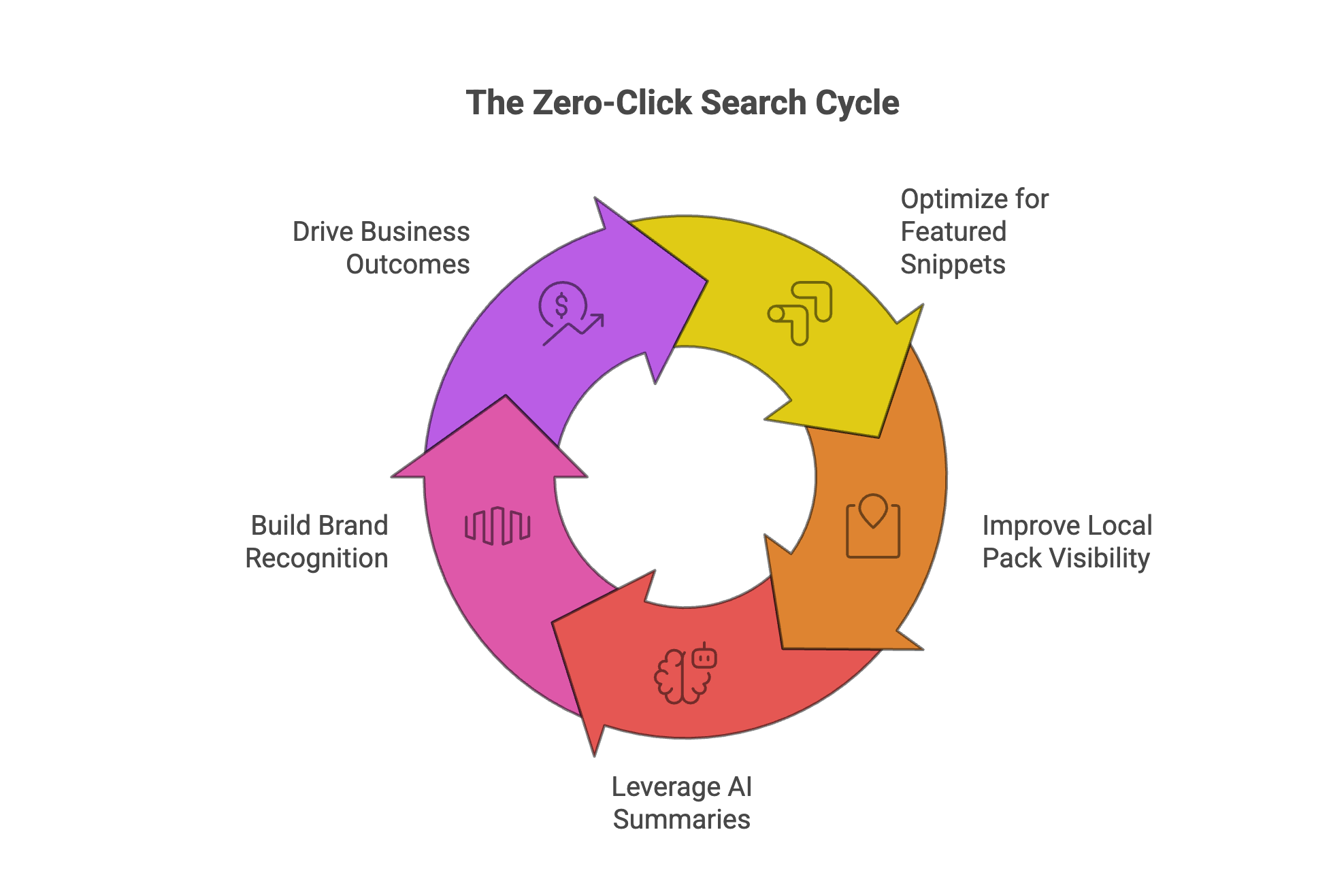
Zero-click search cycle showing steps to optimize for featured snippets, improve local pack visibility, leverage AI summaries, and build brand recognition.

TL;DR:

More than half of Google searches now end without a click because users get their answers directly on the search results page through features like featured snippets, People Also Ask boxes, local packs, and AI Overviews. This means SEO success is no longer just about driving traffic – it’s about earning visibility, citations, and brand recognition directly on the SERP.

To win in the zero-click search era, structure content so search engines and AI can easily extract answers. Use clear question-based headings, concise 40–60 word answers, lists, tables, and schema markup. Strengthen E-E-A-T signals, entity authority, and Google Business Profile optimization so your brand appears in SERP features and AI summaries. Even without a click, this visibility builds trust, drives branded searches, and leads to calls, visits, and conversions.

What zero-click search really means

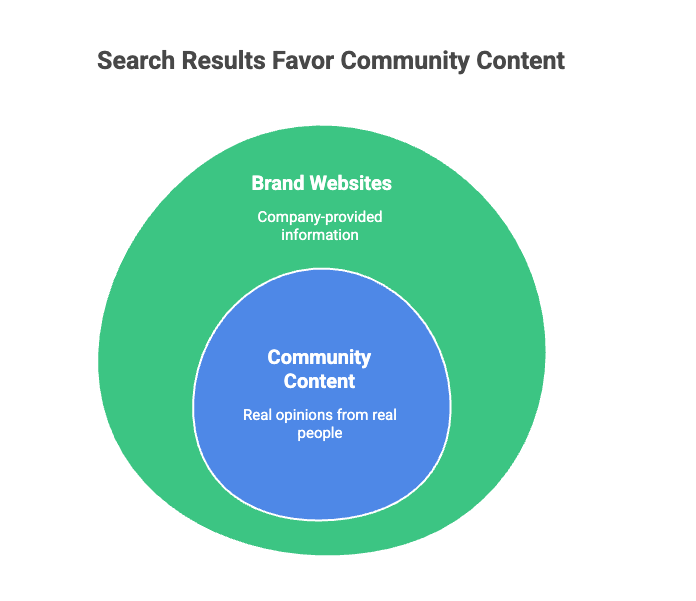
Visualization showing search engines increasingly favor community content and real user opinions alongside brand websites.

A zero-click search happens when someone types a query into Google and gets their answer directly on the results page, without visiting any website. You’ve probably done this yourself, while searching for a quick definition, a business phone number, or today’s weather, then moving on without clicking a single link.

Google has built an entire ecosystem of features designed to answer questions right on the SERP. Featured snippets display paragraph answers at the top of results. Knowledge panels show business information on the right side. People Also Ask boxes expand to reveal answers to related questions. Local packs display maps with business listings. And now, AI Overviews synthesize information from multiple sources into one generated response.

The practical result? Your content can appear in search results, get read, and influence decisions without generating any traffic to your site. For businesses that have always measured SEO success by clicks and sessions, this shift requires a different way of thinking about visibility.

Why zero-click searches now dominate search results
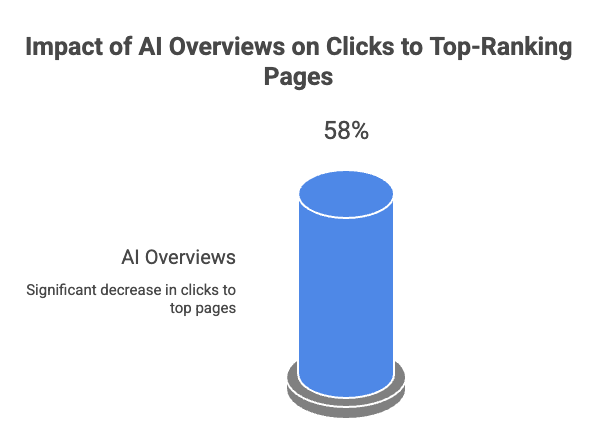
Chart showing AI Overviews can reduce clicks to top-ranking pages by approximately 58 percent.

Google makes money when people stay on its platform longer. More time on Google means more ad impressions. This incentive has driven years of SERP feature expansion that reduces the need to click through to external websites.

User behavior has shifted alongside these changes. Mobile searchers want instant answers while walking, commuting, or multitasking. Voice assistants read single answers aloud rather than offering a list of links. The expectation now is that search engines will provide the answer, not just point you toward it.

What this means for your business: traffic from informational queries has declined for many websites, even when their content continues to appear in search results. You might rank well and still watch your click-through rates drop quarter over quarter. Ahrefs’ December 2025 study found that AI Overviews now reduce clicks to top-ranking pages by 58%.

How AI Overviews have accelerated the zero-click search shift
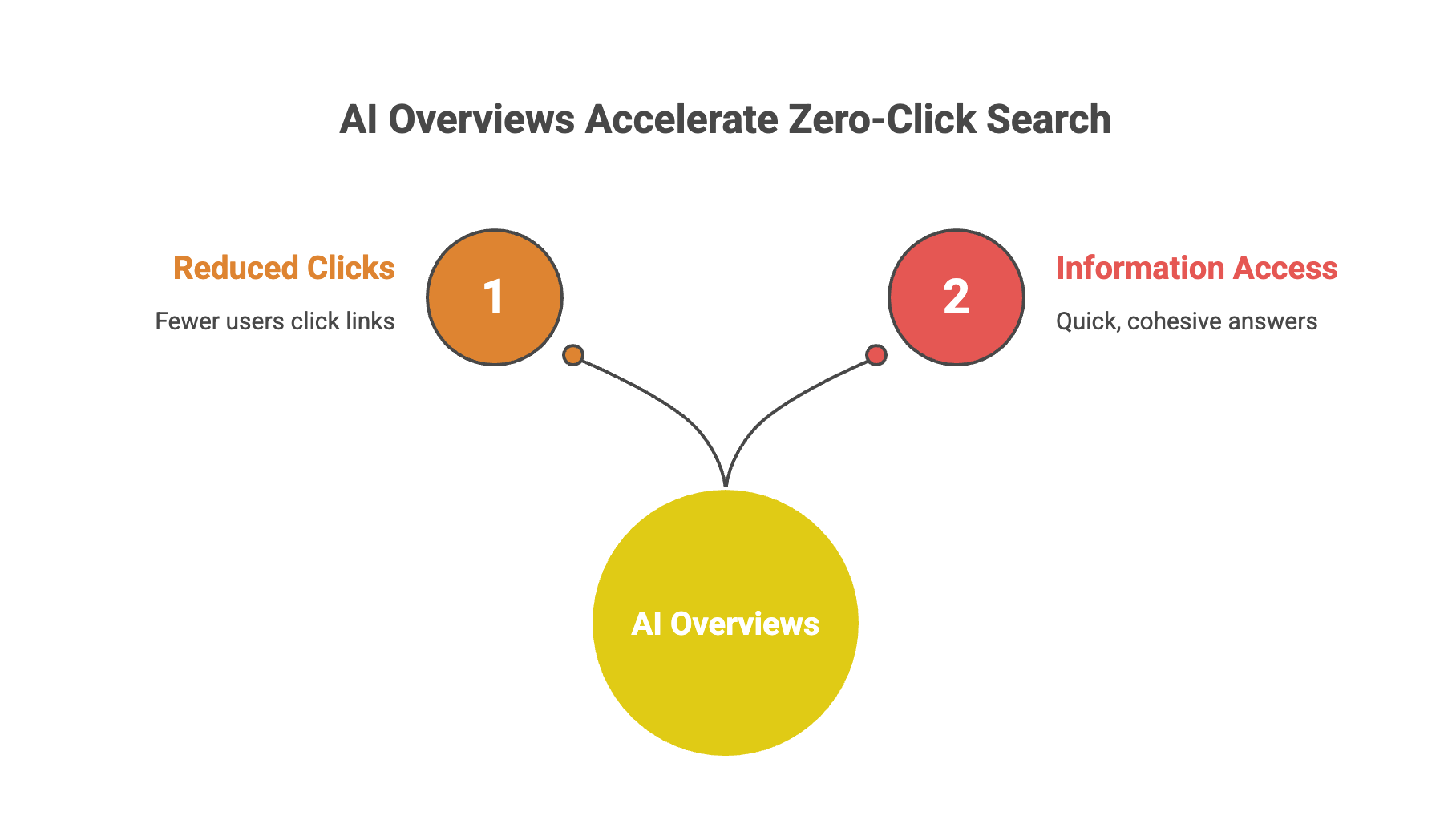
Diagram showing how AI Overviews accelerate zero-click searches by reducing clicks while providing quick information directly in search results.

AI Overviews represent the biggest change to search in years. Instead of showing ten blue links, Google now generates a synthesized answer at the top of the page, pulling information from multiple sources and presenting it as one cohesive response.

Element Traditional SERP AI Overview SERP
Top Position Featured snippet or #1 organic result AI-generated summary
User Action Scan results and choose a link Read the answer and often leave satisfied
Click Likelihood Higher for informational queries Significantly reduced
Source Visibility Title and meta description displayed Brief citation within AI-generated answer

For businesses, traditional metrics like “ranking #1” matter less than whether your content gets cited in the AI-generated answer- Seer Interactive’s research found that cited brands earn 35% more organic clicks.

The sources that AI Overviews pull from tend to have clear, authoritative, well-structured content that algorithms can easily extract and attribute.

Zero-click SERP features you can target
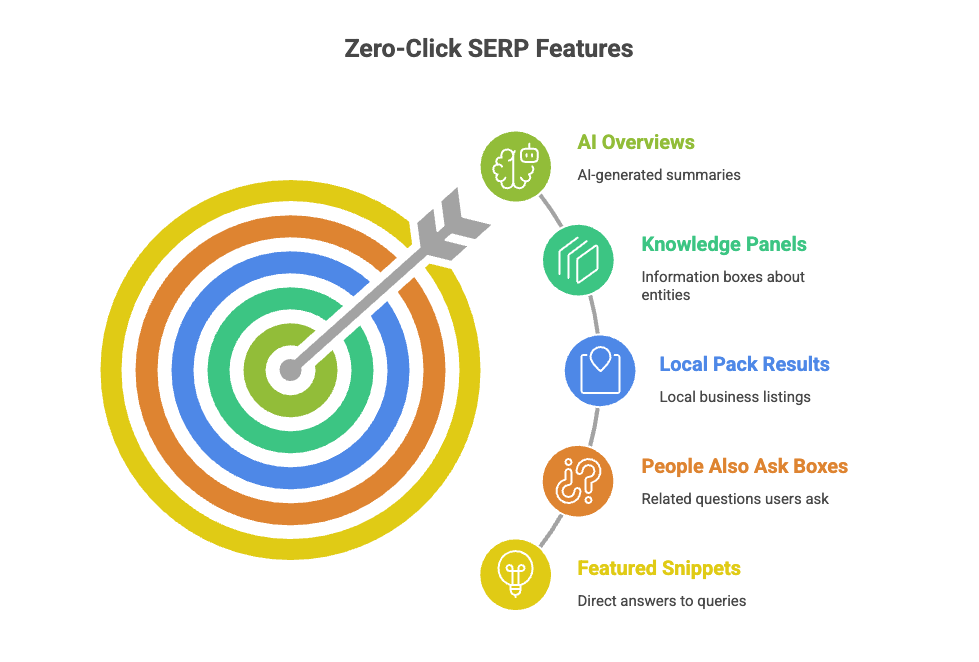
Overview of zero-click SERP features including AI Overviews, knowledge panels, local pack results, people also ask boxes, and featured snippets.

Each SERP feature works differently, and knowing the distinctions helps you optimize with intention rather than guesswork.

Featured snippets

Featured Snippets appear as answer boxes above the first organic result. Google extracts these from pages that directly answer the query, typically in paragraph, list, or table format. A clearer, more concise answer can capture this position even without the highest domain authority.

People Also Ask boxes

People Also Ask boxes expand to show answers to related questions. Each expansion loads a new answer from a different source, creating multiple visibility opportunities from a single search.

Local pack results

Local pack results display for “near me” and location-based queries. For service businesses, this is often the most valuable SERP real estate. Users frequently call or visit directly from local pack results without ever reaching your website.

Knowledge panels

Knowledge panels pull from structured data and authoritative sources to display entity information for brands, people, and organizations.

AI Overviews

AI Overviews synthesize information from multiple sources into a single answer. Being cited here requires content that AI systems can easily extract, understand, and attribute to your brand.

Answer Engine Optimization vs traditional SEO

Answer Engine Optimization, or AEO, focuses on getting your content cited by AI systems and voice assistants that provide direct answers. Traditional SEO aims for rankings and clicks. You now benefit from both approaches working together.

Factor Traditional SEO Answer Engine Optimization
Primary goal Rank high, earn clicks Get cited, provide the answer
Success metric Click-through rate, traffic Impressions, brand mentions, citations
Content format Comprehensive, long-form Concise, extractable, answer-ready
Technical focus Page speed, mobile, crawlability Schema markup, entity clarity, structured data

The distinction matters because a modern SEO strategy requires both approaches, optimizing only for traditional SEO can actually hurt your zero-click visibility. Content designed to tease an answer and encourage clicks often gets passed over in favour of content that provides the answer directly and clearly.

How to build your zero-click Search optimization strategy
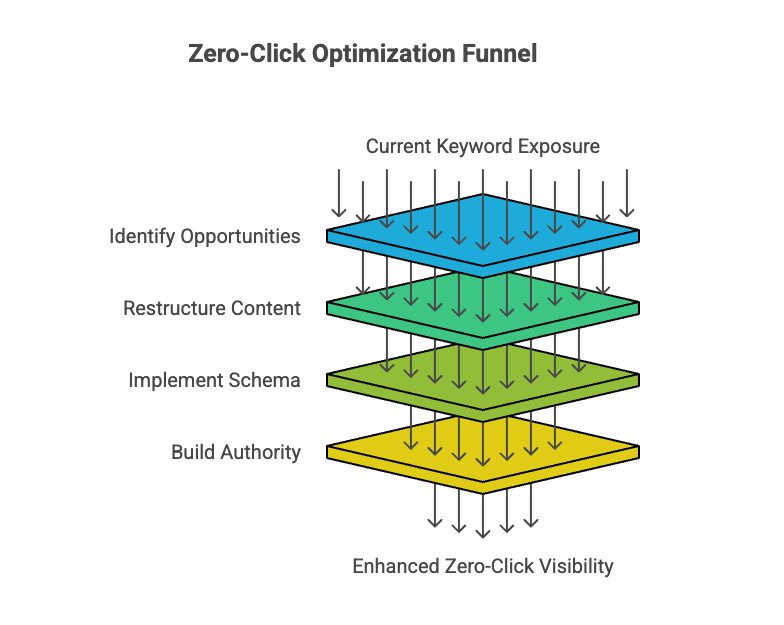
Zero-click SEO optimization funnel showing steps: identify opportunities, restructure content, implement schema, and build authority.

1. Audit your current zero-click keyword exposure

Start in Google Search Console by looking for queries where you have high impressions but low clicks. A structured SEO audit helps you surface these zero-click queries systematically, so you can separate real visibility wins from content that’s simply not generating clicks.

Rather than viewing this as failure, treat impression share as a metric worth tracking on its own.

2. Identify high-value zero-click Search opportunities

Tools like Semrush or AnswerThePublic help you find question-based queries in your niche. Prioritize queries where appearing in the answer builds brand awareness with your ideal customers, even without a click. Not every zero-click query is worth pursuing, but those that reach your target audience can be valuable for recognition and trust.

3. Restructure content for answer extraction

AI Overviews synthesize information from multiple sources, with each source typically contributing a small portion of the final answer. Structure your content with the question as an H2 header and a direct, concise answer as the first paragraph. Clarity and directness outperform keyword stuffing.

The format that tends to work well:

Question as header: Use the actual question your audience is asking
Direct answer first: Lead with a 40-60 word response that stands alone
Supporting detail after: Expand with context, examples, and nuance below the initial answer

4. Implement schema markup for SERP features

Schema markup is code that helps search engines understand your content’s structure and meaning. Think of it as labeling your content so Google knows exactly what each section represents.

The most impactful types for zero-click visibility include:

FAQPage schema: Helps your Q&A content appear in People Also Ask and rich results
HowTo schema: Enables step-by-step instructions to appear as rich snippets
LocalBusiness schema: Strengthens local pack eligibility and knowledge panel accuracy

5. Build entity authority across platforms

Entity SEO refers to Google’s understanding of your brand as a distinct “thing” in its Knowledge Graph. When Google confidently identifies your brand as an entity, it’s more likely to feature your content in zero-click results.

Consistent information across your website, Google Business Profile, LinkedIn, and industry directories strengthens this recognition. Inconsistencies such as different phone numbers, varying business names, conflicting addresses, weaken entity signals and reduce your chances of appearing in SERP features.

Content formats that win zero-click visibility
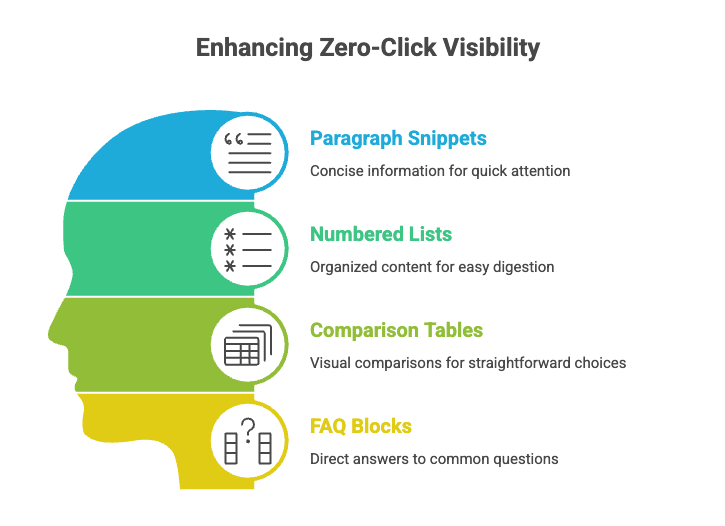
Content formats that improve zero-click visibility including paragraph snippets, numbered lists, comparison tables, and FAQ blocks.

Different query types trigger different SERP features. Matching your content format to the query intent increases your chances of being featured.

Paragraph snippets work best for definition queries. The “[Term] is…” format signals to Google that you’re providing a clear definition. Keep definitions concise for optimal extraction.

Numbered lists get pulled into list snippets for “how to” and process queries. Clear H2/H3 structure with numbered steps signals that your content answers procedural questions.

Comparison tables appear for “X vs Y” queries. Simple HTML tables with clear headers and concise cell content are more likely to be extracted than dense paragraphs covering the same information.

FAQ blocks align with People Also Ask boxes. Each Q&A pair works best when self-contained, with the answer appearing in the first sentence after the question.

E-E-A-T signals that boost zero-click authority
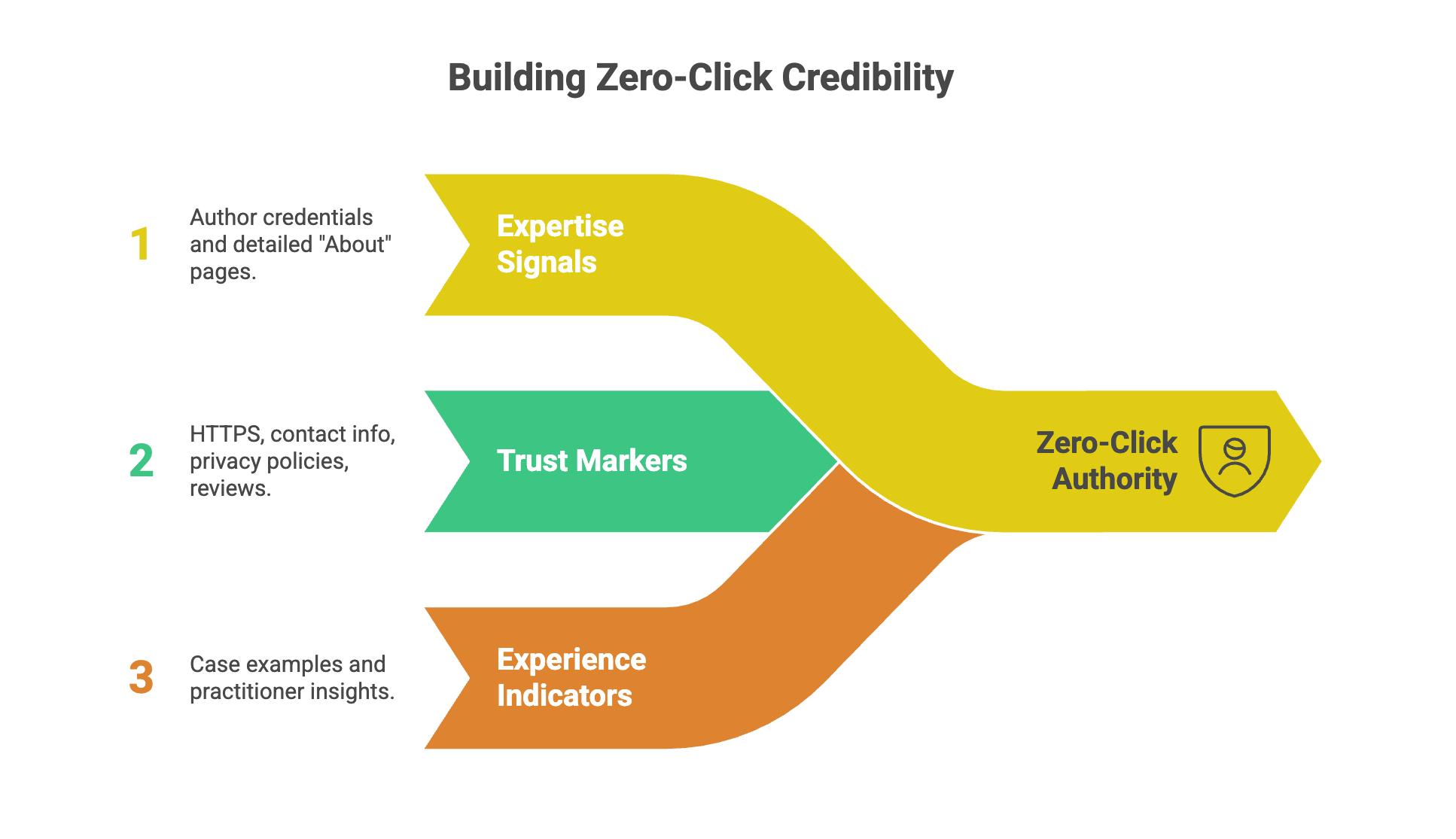
Framework for building zero-click SEO credibility through expertise signals, trust markers, and real experience indicators.

E-E-A-T stands for Experience, Expertise, Authoritativeness, and Trustworthiness. This is Google’s framework for evaluating content quality, and these signals matter more for zero-click results because Google only surfaces answers from sources it trusts.

Expertise signals: Author bylines with credentials, detailed “About” pages, links to LinkedIn profiles
Trust markers: HTTPS, clear contact information, privacy policies, reviews, and strong Core Web Vitals scores
Experience indicators: Case examples, original insights, practitioner perspective that shows real-world application

First-hand experience differentiates your content from generic information. AI systems increasingly prioritize content that demonstrates actual knowledge over content that simply aggregates information from other sources.

How to measure zero-click SEO success
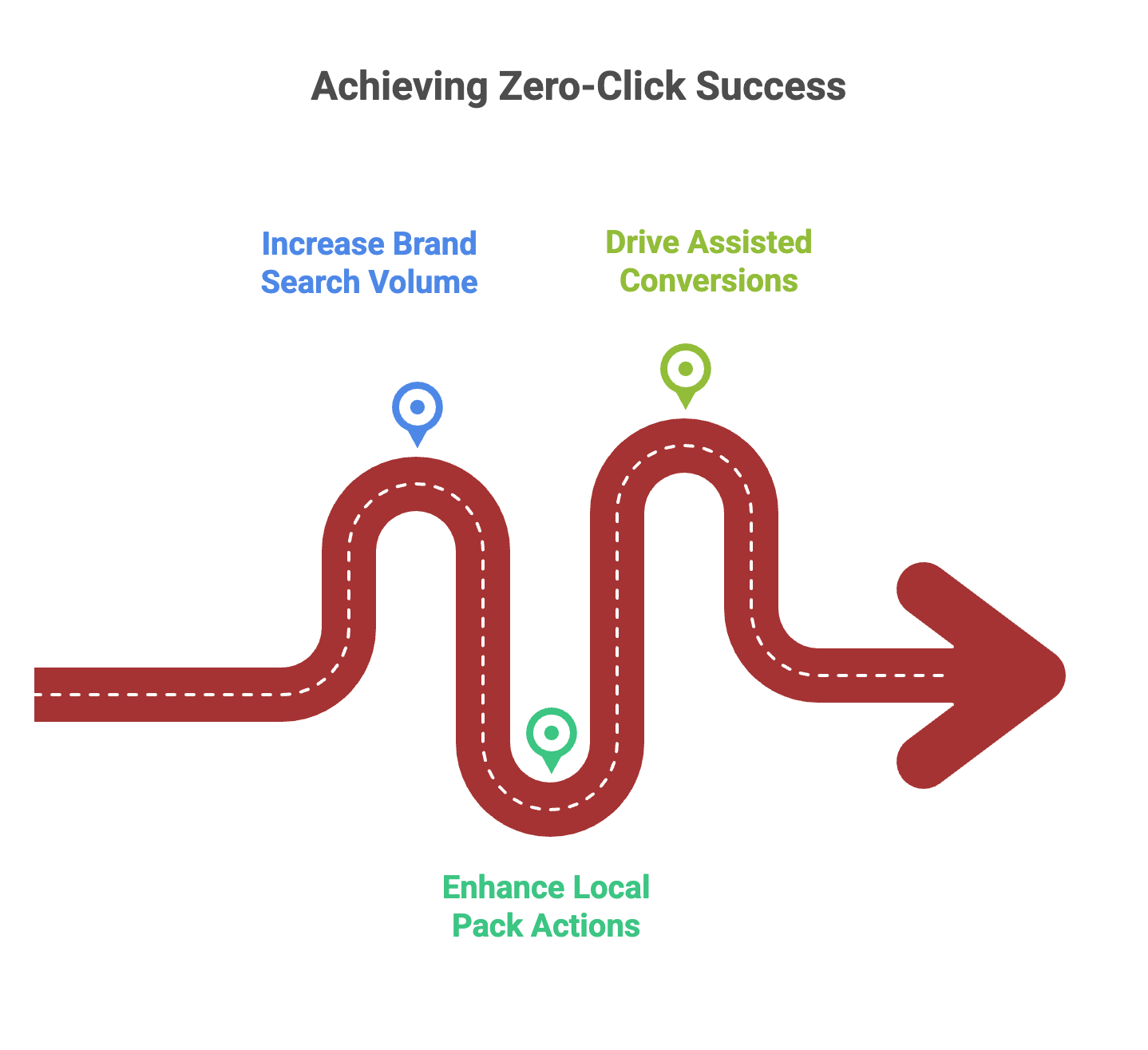
Achieving zero-click SEO success by increasing brand search volume, enhancing local pack actions, and driving assisted conversions.

Traditional traffic metrics don’t capture zero-click search value. When someone sees your brand in a featured snippet and remembers your name, that’s valuable even without a click.

Track these metrics instead:

Impressions in Search Console: High impressions with low clicks may indicate zero-click success, not failure
Brand search volume: Zero-click visibility often drives branded searches later
Local pack actions: Calls, direction requests, and website visits from Google Business Profile
Assisted conversions: Users who discover you via zero-click may convert through another channel

The full customer journey matters more than last-click attribution. Someone might see your brand in an AI Overview today and search for you by name next week.

How local businesses win in the zero-click Search era
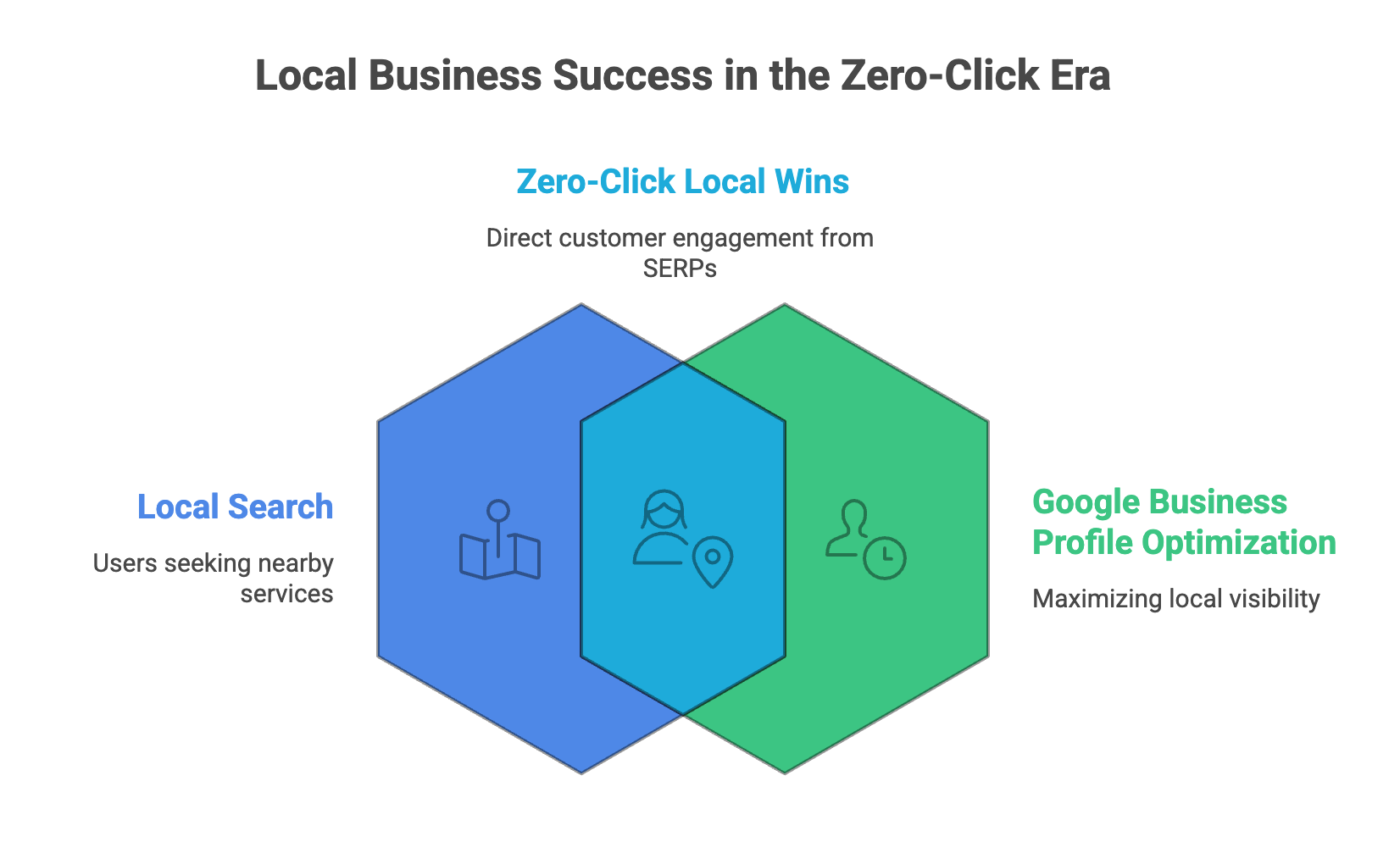
Local SEO strategy diagram showing how local search and Google Business Profile optimization drive zero-click engagement.

Local search is inherently zero-click. Users call, get directions, or visit directly from the SERP without ever reaching your website. For local businesses, this makes Google Business Profile optimization essential.

Complete every field in your profile: categories, attributes, photos, posts, Q&A, and review responses. Birdeye’s 2025 study found that fully optimized profiles surface 80% more often in search and generate 4x more website visits.

Target “near me” and city-specific queries with dedicated service area pages on your website. Build local entity authority through citations, chamber of commerce listings, and local news mentions.

The local pack is often where your customers make their decision. A fully optimized Google Business Profile captures conversions that never show up in your website analytics but still drive real revenue.

Looking to adapt your SEO approach for zero-click search? Book a free consultation with Digital 6ix to discuss how AI Search Optimization and local SEO can help your Toronto business stay visible where customers are actually searching.

This Blog is written by Simar Singh, Founder of Digital 6ix and a data-driven storyteller with 7+ years of experience helping Toronto businesses grow through performance-led digital strategies. Certified in Google Analytics and Google Search Console, with a strong focus on turning insights into measurable business outcomes.

Frequently Asked Questions

Leave a Comment

Your email address will not be published. Required fields are marked *