

Table Of Contents
- On-Page SEO Strategy in 2026: What Still Works and What's Completely Dead
- Why on-page SEO has fundamentally changed
- On-page tactics that still drive rankings
- On-page tactics that are completely dead
- How to Validate Customer Keywords Without Paid Tools
- Technical on-page elements you cannot ignore
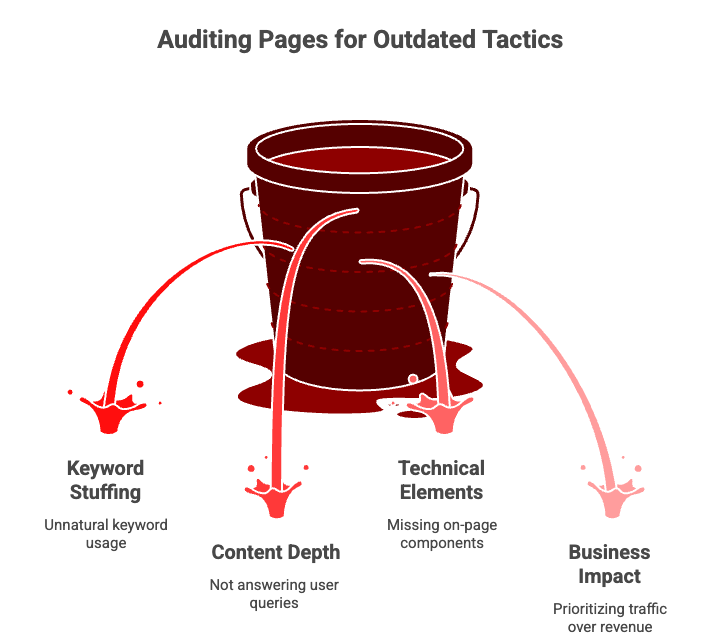
- How to audit your pages for outdated on-page tactics
- How to measure on-page SEO success beyond traffic
- Why on-page SEO compounds when you execute it right
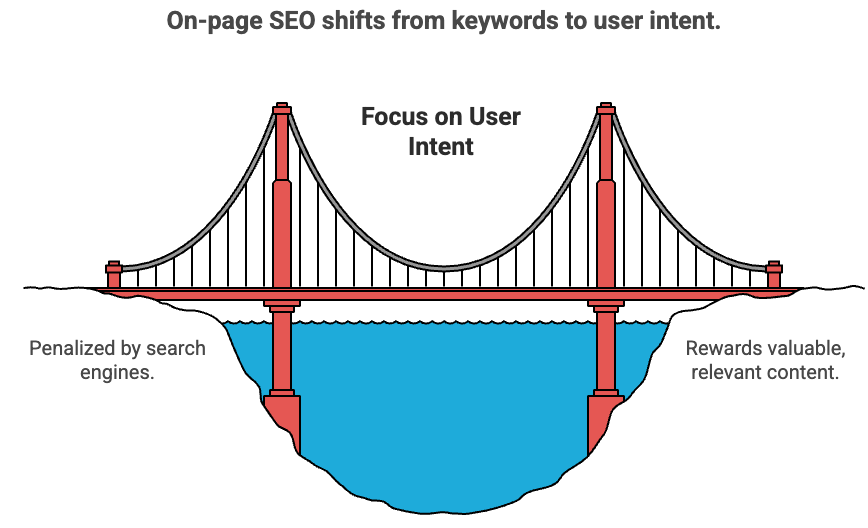
On-Page SEO: Then vs Now
A quick comparison of what mattered before vs what matters today.
| On-Page SEO Then | On-Page SEO Now |
|---|---|
| Keyword density focus | User intent alignment |
| Optimizing for crawlers | Optimizing for humans and AI |
| Ranking position as goal | Citations and conversions as goals |
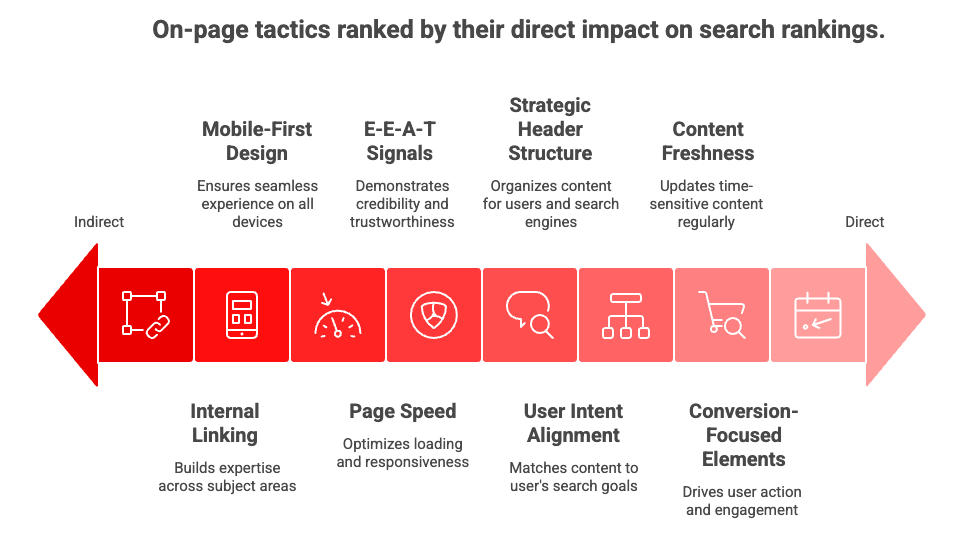
On-page tactics that still drive rankings
On-Page Tactics That Are Completely Dead
| Tactic | Why It No Longer Works |
|---|---|
|
Exact-match keyword stuffing
|
Keyword stuffing means artificially repeating your target keyword throughout a page in hopes of ranking higher. Search engines now penalize this practice because it creates a poor reading experience and signals manipulation.
Write naturally instead. If your content genuinely covers a topic, relevant keywords will appear organically. |
|
Meta keyword tags
|
Meta keywords were an HTML tag where you could list target keywords for search engines. Google has ignored them since 2009, so you can safely remove them from your pages to clean up your code.
|
|
Thin content targeting long-tail variations
|
The old playbook involved creating separate pages for minor keyword variations, like “Toronto SEO services,” “SEO services Toronto,” and “SEO Toronto services.” This approach now causes keyword cannibalization, where your own pages compete against each other.
One comprehensive page targeting a topic cluster outperforms multiple thin pages every time. |
|
Over-optimized anchor text
|
Anchor text is the clickable text in a hyperlink. Using exact-match keywords as anchor text in high volumes now appears manipulative to search engines.
Vary your anchor text naturally. Descriptive phrases that tell readers what they’ll find work better than forced keyword matches. |
|
Hidden text and keyword cloaking
|
Hidden text involves placing keywords on a page in a way users can’t see, like white text on a white background. Keyword cloaking shows different content to search engines than to users. Both trigger penalties and have no place in modern SEO.
|
|
Duplicate title tags across pages
|
Every page on your site deserves a unique, descriptive title tag. Duplicate titles confuse search engines about which page to rank and reduce click-through rates in search results.
|
|
Content written purely for search engines
|
Content that prioritizes bots over readers gets filtered out by modern algorithms. Warning signs include awkward phrasing to fit keywords, walls of text with no formatting, and generic information available on dozens of other pages.
|
How to Validate Customer Keywords Without Paid Tools
Technical On-Page Elements You Cannot Ignore
| Element | Why It Matters |
|---|---|
|
Optimized title tags and meta descriptions
|
Title tags affect both rankings and click-through rates. Keep them under 60 characters and front-load your most important keywords. Meta descriptions don’t directly affect rankings but influence whether searchers click. Aim for 150-160 characters that compel action.
|
|
Descriptive URL structures
|
Clean, keyword-relevant URLs outperform parameter-heavy or auto-generated alternatives. A URL like /on-page-seo-guide/ tells users and search engines more than /page?id=12345.
|
|
Schema markup for rich results
|
Beyond FAQ and HowTo, consider product, review, article, and local business schema types depending on your content. Rich results stand out in search and earn higher click-through rates.
|
|
Image optimization and alt text
|
Compress images for faster loading, use descriptive file names, and write alt text that describes the image for accessibility and image search visibility.
|
|
Canonical tags and indexing controls
|
Canonical tags tell search engines which version of a page to index when similar content exists at multiple URLs. Use them to prevent duplicate content issues and consolidate ranking signals.
|
How to audit your pages for outdated on-page tactics
Frequently Asked Questions