
Google Algorithm Evolution:
What Changed From 2020 to 2026
From 2020 to 2026, Google’s algorithm evolved from keyword-focused ranking to intent-driven, AI-powered evaluation. Updates like BERT, Core Web Vitals, the Helpful Content system, and AI Overviews shifted the focus toward first-hand experience, topical authority, E-E-A-T signals, and genuine usefulness. Ranking is no longer about keyword density or link volume — it’s about whether your content truly satisfies user intent better than competitors.
What is Google’s Search Algorithm
Google’s search algorithm is a collection of ranking systems that decide which pages show up when someone types a query. It’s not one formula but hundreds of signals working together, evaluating relevance, quality, and usability all at once.
When you search for something, the algorithm scans billions of pages and ranks them based on how well they answer your specific question. The signals it looks at include content relevance, backlinks, page speed, and mobile experience, among others.
Google Algorithm Evolution Since 2020
The shift from 2020 to 2026 marks a fundamental change in what Google rewards. Back in 2020, the algorithm focused on mobile-first indexing and E-A-T. By 2026, the system prioritizes first-hand experience, topical authority, and AI-driven answers, with Gemini AI now powering much of how Google interprets search queries.
| Factor | 2020 Approach | 2026 Approach |
|---|---|---|
| Content Quality | Keyword relevance and length | Helpfulness, originality, and depth |
| Trust Signals | Backlinks and domain authority | E-E-A-T (Experience added) |
| User Experience | Mobile-friendliness emerging | Core Web Vitals required |
| AI Content | Not addressed | Policies against scaled, unhelpful AI content |
| Search Results | Traditional blue links | AI Overviews, zero-click answers |
The practical takeaway: content matching keywords no longer competes on its own. Google now evaluates whether your content genuinely satisfies the searcher’s intent better than alternatives.
Major Algorithm Updates: 2020–2026
-
2020
Core updates in January, May, and December. BERT expanded its reach, helping Google better understand natural language queries rather than just matching keywords to pages.
-
2021
The Page Experience update introduced Core Web Vitals as ranking factors. Google also launched MUM (Multitask Unified Model) and began rolling out Product Reviews updates to reward in-depth, first-hand reviews.
-
2022
August brought the Helpful Content Update — arguably the biggest philosophical shift in Google’s history. This system evaluates whether content is created for people or primarily for search engines.
-
2023
The Helpful Content system became a sitewide signal. Unhelpful content anywhere on your domain can drag down your entire site’s rankings, not just individual pages.
-
2024
The March 2024 core update targeted site reputation abuse and low-quality content at scale. Google launched AI Overviews, now appearing in ~16% of all queries.
-
2025–26
Core updates in March, June, August, November, and December 2025, plus a Discover core update in February 2026. The pace of changes has accelerated significantly.
Core Updates vs. Manual Penalties
Core updates are broad relevance reassessments, not punishments. A drop doesn’t mean you did something wrong — it often means others did something better.
Manual penalties result from specific policy violations that require human review at Google. You’ll receive an explicit notification in Google Search Console. Common violations include unnatural links, thin content, cloaking, and user-generated spam.
Navigate to Google Search Console → Security & Manual Actions → Manual Actions. If you see an issue listed, you’ll find instructions for fixing it and submitting a reconsideration request.
The Helpful Content System Explained
This system assesses whether your content is created for people or primarily to rank in search engines. It’s now integrated into Google’s core ranking systems rather than running as a separate update.
- →People-first content Written to satisfy the reader’s actual question, not just to rank for keywords.
- →Sitewide signal Low-quality sections anywhere on your site can negatively affect your entire domain’s rankings.
- →Automated system No manual review — Google’s systems continuously evaluate helpfulness.
- →Recovery timeline Improvements may take months to reflect after the system re-crawls your site.
What E-E-A-T Means for Your Rankings
E-E-A-T stands for Experience, Expertise, Authoritativeness, and Trustworthiness. It’s not a direct ranking factor but a framework Google’s quality raters use to assess content quality. The extra “E” for Experience was added in late 2022.
Experience
First-hand experience matters more than ever. A review from someone who actually used the product carries far more weight than a summary of other reviews.
Expertise
Demonstrated knowledge in the subject area — shown through credentials, depth of content, and accuracy of information.
Authoritativeness
Recognition from others in your field. Citations, mentions, and backlinks from reputable sources all contribute.
Trustworthiness
The most important factor. Accurate info, transparent authorship, HTTPS, and honest practices. Critical for YMYL topics.
Why Quality Content Still Loses Rankings
“Quality” in Google’s view means satisfying user intent better than competitors — not just being well-written. Here are the most common reasons strong content loses visibility:
- ✕Intent mismatch Your content may be excellent but doesn’t match what searchers actually want when they type that query.
- ✕Thin topical coverage Competitors have deeper, more comprehensive content ecosystems around the same topics.
- ✕Sitewide quality drag Other low-quality pages on your domain affect the rankings of your good pages.
- ✕Technical issues Slow load times, poor mobile experience, or crawlability problems hold back otherwise strong content.
- ✕Authority gap Competitors have stronger E-E-A-T signals and backlink profiles in your space.
SEO Tactics From 2020 That No Longer Work
Keyword-stuffed content
Google now understands semantic meaning, so repeating exact keywords looks unnatural and can harm rankings. The algorithm recognizes synonyms and related concepts, making keyword density far less important than it used to be.
Mass link building without relevance
Link spam updates now devalue or penalize irrelevant, purchased, or manipulative links. A handful of links from authoritative, relevant sites outperforms hundreds of low-quality links.
Thin affiliate and doorway pages
Pages with little original value beyond affiliate links are explicitly targeted by spam policies. If your page doesn’t add something unique beyond what the merchant already provides, it’s vulnerable.
Scaled content without original value
Whether human or AI-generated, mass-produced content lacking unique insights gets flagged by the Helpful Content system. Volume without value is now a liability rather than an asset.
How AI Is Reshaping Google Search
AI Overviews, launched in 2024, provide synthesized answers at the top of search results. Research found organic CTR dropped sharply on queries with AI Overviews — meaning your content may inform an answer without receiving a click. This fundamentally changes how you measure SEO success.
Google doesn’t automatically penalize AI content. However, AI-generated content that’s unhelpful, unoriginal, or scaled to manipulate rankings violates spam policies. The distinction is about value, not how the content was created.
Structuring content so AI systems can understand, cite, and recommend your brand. This means clear entity definitions, answer-ready formatting like FAQ schema, and demonstrable expertise that AI can confidently reference.
How to Recover After a Google Algorithm Update
- Identify what type of update hit your site
Check the timing of your traffic drop against known update dates. Distinguish between a core update, manual action, or spam update — each requires a different response.
- Audit your content against current guidelines
Review your content using Google’s own questions about helpful content. Identify pages that appear unhelpful or search-engine-first rather than reader-first.
- Strengthen your E-E-A-T signals
Add author bios with credentials, cite sources, demonstrate first-hand experience, and improve your About and Contact pages. Earning quality backlinks also helps.
- Fix technical and page experience issues
Run a Core Web Vitals audit, resolve mobile usability issues, and fix crawl errors in Google Search Console.
- Monitor results and iterate
Recovery isn’t instant. It may take months and multiple update cycles — patience and consistent improvement matter more than quick fixes.
Frequently Asked Questions
How often does Google update its search algorithm?
Google makes thousands of changes annually, with only a handful formally announced each year. Most changes are minor and unannounced, which is why tracking your rankings against specific update dates can be tricky.
How long does it take to recover from a Google core update?
Recovery typically requires waiting for the next core update after making significant improvements — which can take several months. Some sites recover faster, while others with deeper quality issues may take longer.
Does Google penalize AI-generated content?
Google doesn’t automatically penalize AI content. However, AI-generated content that’s unhelpful or created primarily to manipulate rankings violates spam policies. The focus is on value, not how the content was produced.
How do I know if my site was hit by an algorithm update?
Check Google Search Console for significant traffic drops that align with known update dates. Also check for manual actions under “Security & Manual Actions” to rule out a penalty.
Need help navigating algorithm changes?
At Digital 6ix, we build sustainable organic visibility through ethical, ROI-driven approaches — not chasing loopholes that disappear with the next update.
Get a Free SEO Consultation →Our Process
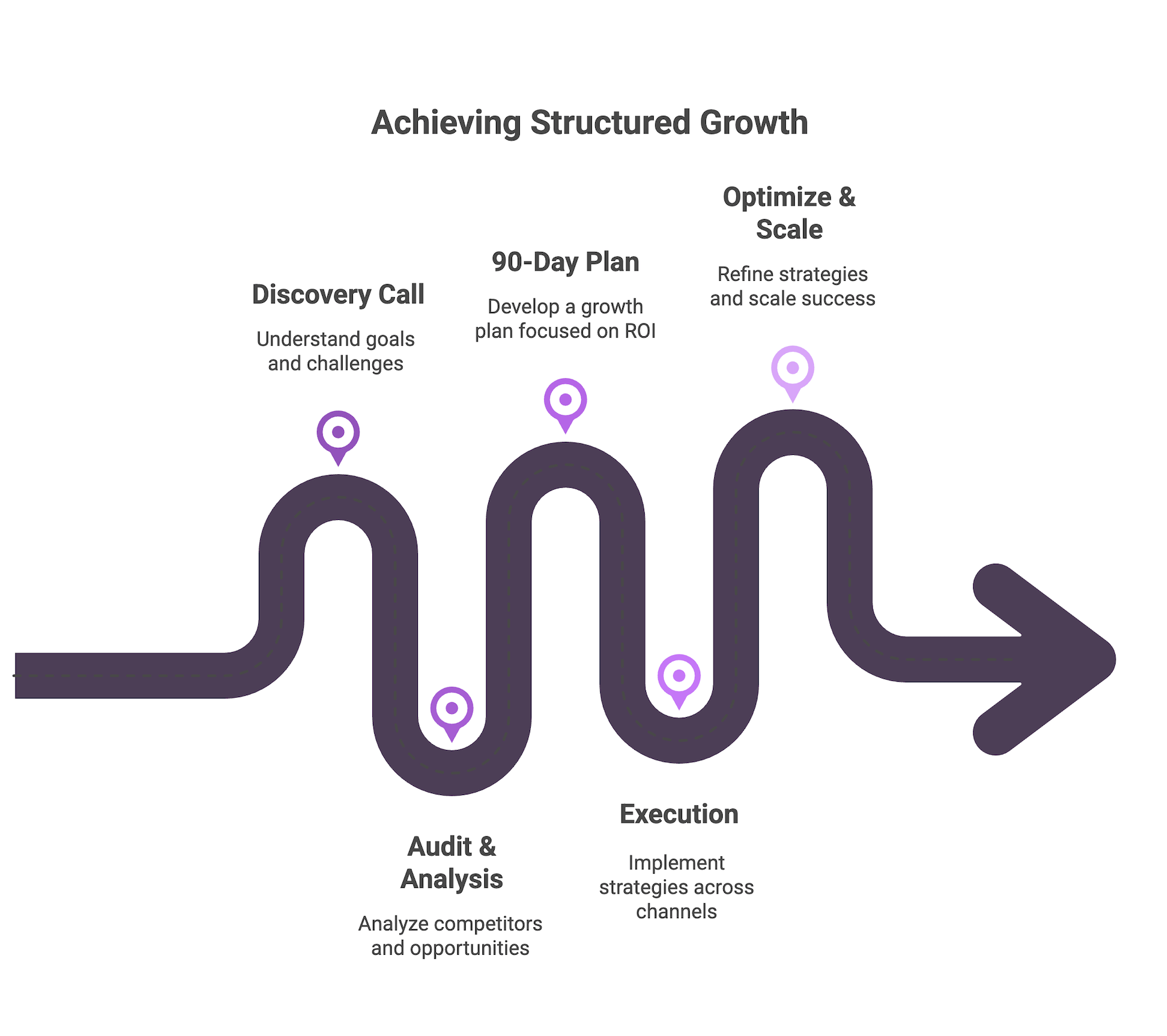
We don’t throw random tactics at your business. We follow a structured growth system that blends strategy, execution, and optimization, designed to deliver results you can actually feel.