Read Time:
Modified Date:
How Community SEO Is Reshaping Search Results in 2026
Google’s search results look different than they did a year ago. Reddit threads, Quora answers, and forum discussions now rank alongside, and often above the brand websites for the queries your customers are typing.
This shift means your website alone isn’t enough to capture visibility anymore. Community SEO focuses on optimizing your brand’s presence within these community platforms to show up where real conversations happen.
This guide covers what community SEO actually involves, how to research keywords and create content that ranks within communities, and how to measure whether your efforts are driving business results

TL;DR:
Community SEO focuses on building your brand’s visibility within platforms like Reddit, Quora, Facebook Groups, and forums, where real conversations about products and services already happen. Because Google increasingly ranks community discussions for recommendation and comparison queries, businesses can gain visibility not just through their websites but through authentic participation in these communities.
To succeed, identify where your audience asks questions, contribute genuinely helpful answers, create discussion content around long-tail queries, and monitor referral traffic and brand mentions. Community engagement builds trust, generates long-lasting discussions that rank in search, and even increases the chances of being cited by AI tools like ChatGPT and Perplexity. In 2026, search visibility extends beyond your website, it includes the conversations happening about your brand across the web.
- How Community SEO Is Reshaping Search Results in 2026
- Why Search Results Now Favour Community Content
- What Is Community SEO
- Why Community SEO Drives Sustainable Business Growth
- How to Research Keywords for Community SEO
- How to Optimize Community Pages for Search
- Technical SEO for Community Platforms
- Internal Linking Strategies for Online Communities
- How to Create Community Content That Ranks
- How to Measure Community SEO Performance
- Common Community SEO Mistakes to Avoid
- How Community SEO Connects to AI Search
- How to Optimize for Search and Engage the Community
Why Search Results Now Favour Community Content
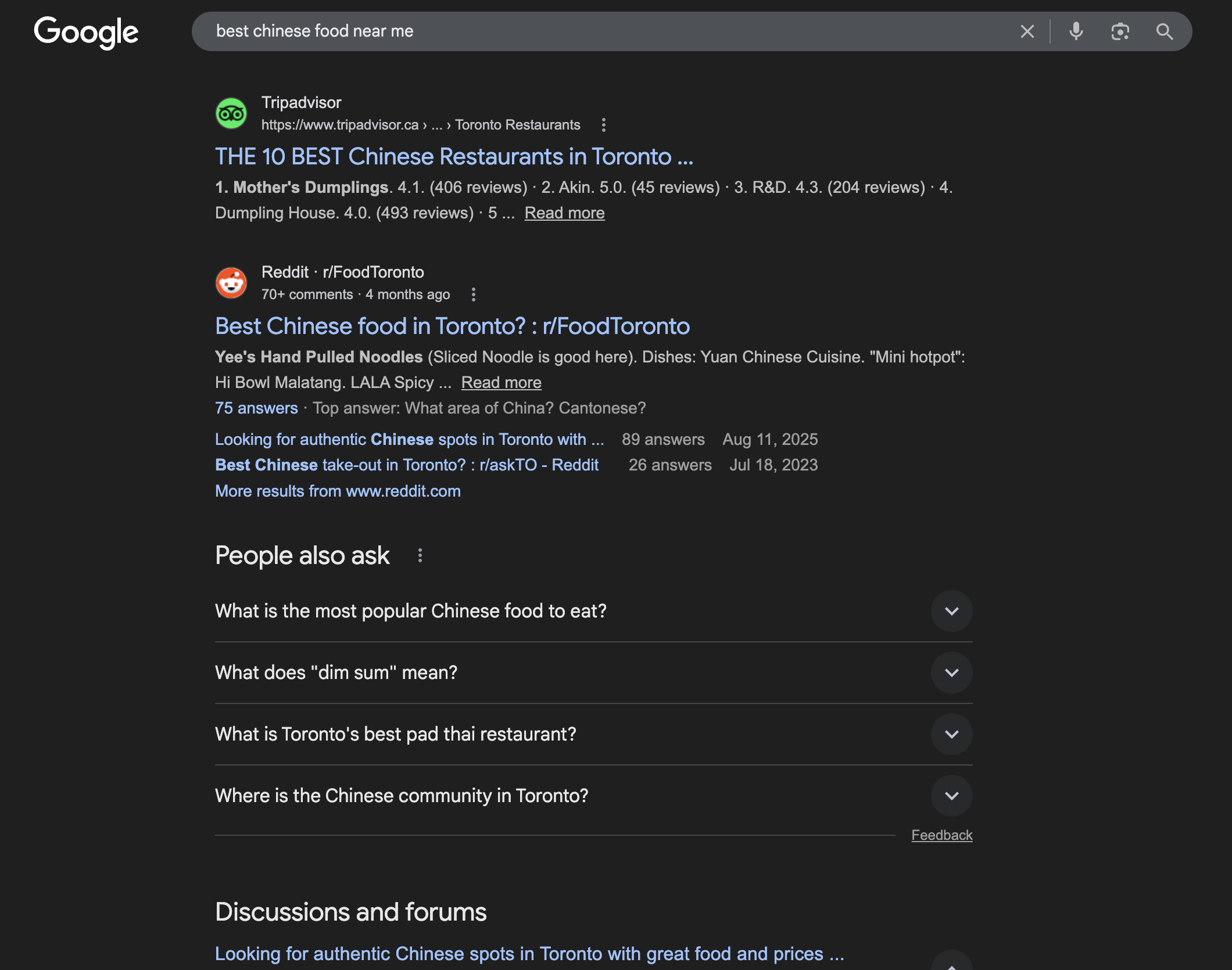
If you’ve searched for product recommendations or service reviews lately, you’ve probably noticed something different. Reddit threads, Quora answers, and forum discussions now show up right alongside brand websites, and sometimes even above them.
Google’s algorithm evolution drove this shift because searchers want real opinions from real people. When someone types “best Italian restaurant Toronto,” they’re often looking for unfiltered takes, not polished sales pages. And Google has caught on.
What does this mean for your business? Your website alone isn’t competing for attention anymore. The conversations happening about your industry on community platforms are now ranking for the same keywords you’re targeting.
What Is Community SEO
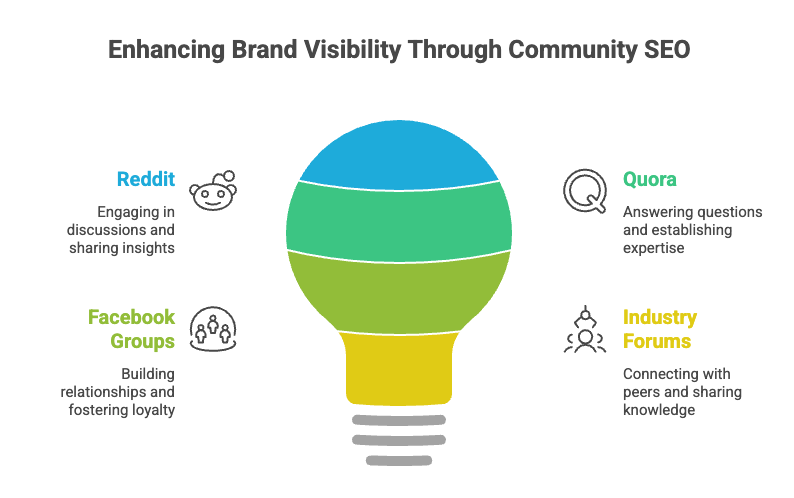
Community SEO is the practice of optimizing your brand’s presence across platforms like Reddit, Quora, Facebook Groups, and industry forums to increase discoverability and trust. Rather than focusing on ranking your own website, community SEO focuses on showing up where authentic discussions already happen.
Here’s the key difference:
| Traditional SEO | Community SEO |
|---|---|
| Optimizes your website to rank in search engines | Optimizes your brand presence within community platforms that appear in search results |
| You control the content | User-generated content drives visibility |
| Focuses on keywords and backlinks | Focuses on engagement and authenticity |
You can think of community SEO as meeting your audience in spaces they already trust. Instead of pulling people to your site, you’re earning visibility through genuine participation in conversations they’re already having.
Why Community SEO Drives Sustainable Business Growth
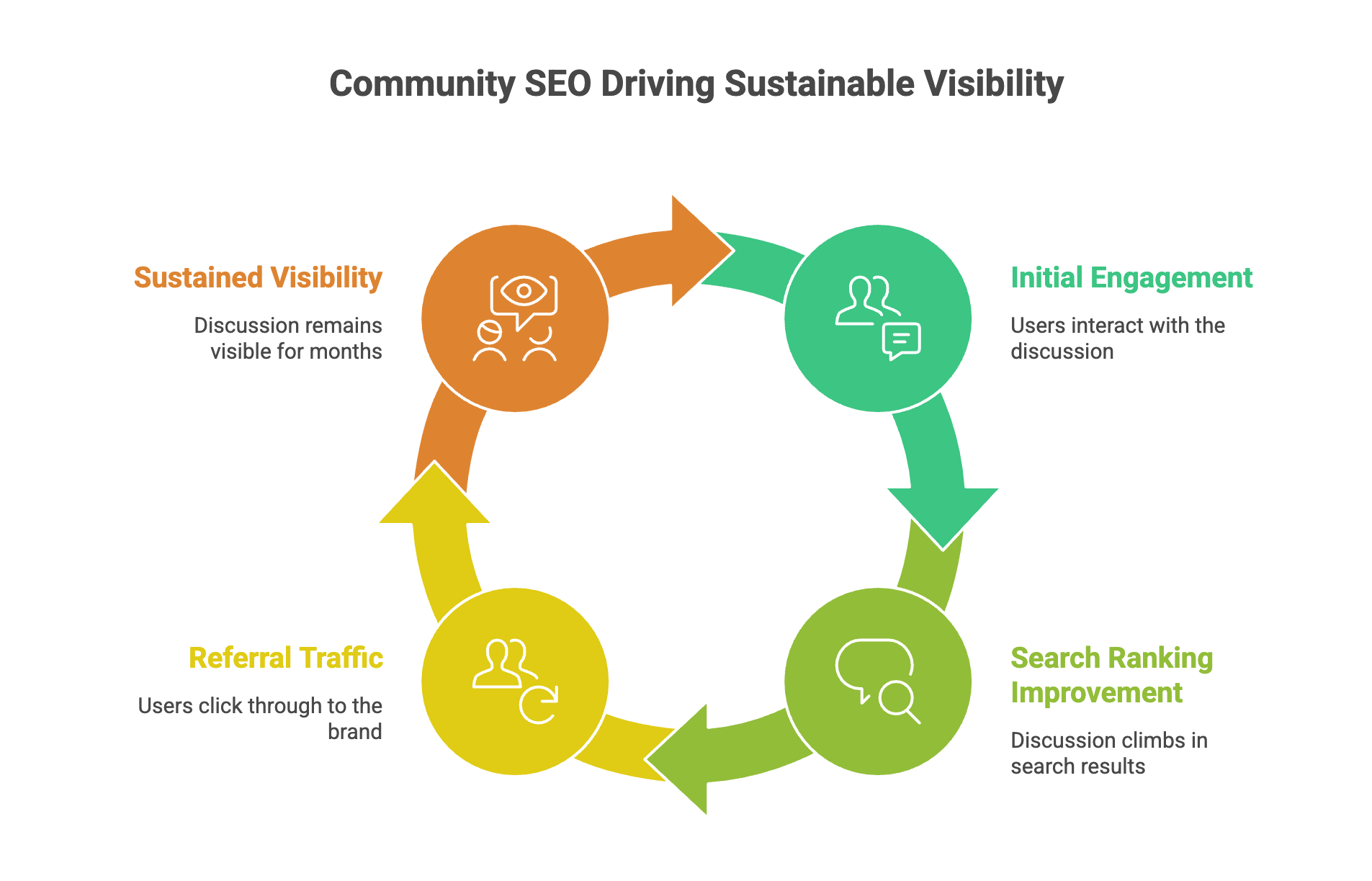
Community discussions rank for long-tail queries that branded content often misses entirely. When someone searches “is [service] worth it reddit,” they’re deep in the decision-making process. A helpful thread mentioning your business carries more weight at that moment than any ad.
According to Nielsen’s Global Trust in Advertising Study, which surveyed over 28,000 consumers across 56 countries — 92% of people trust earned media such as word-of-mouth recommendations above all other forms of advertising. A genuine recommendation in a forum thread acts as social proof, the kind that no amount of website copy can replicate.
And here’s what makes community SEO particularly valuable: the results compound. Unlike paid ads that stop working when you stop paying, a well-positioned community discussion can drive referral traffic for months or even years as it gains engagement and climbs in search rankings.
How to Research Keywords for Community SEO
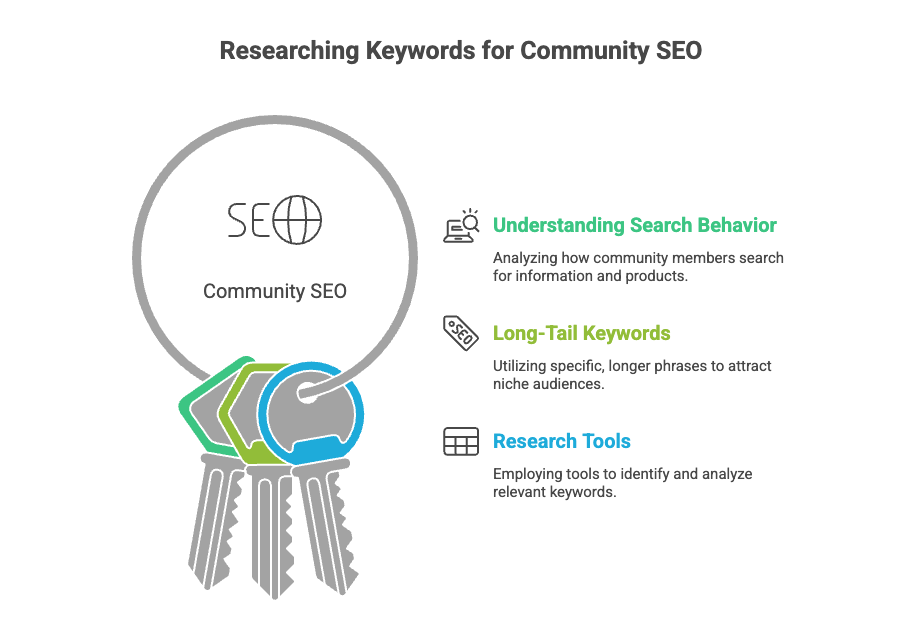
Keyword research for community SEO looks different from traditional approaches. You’re looking for questions and discussions people are already having, not just search volume numbers.
Understanding How Community Members Search
Community searchers use conversational, question-based queries. They search for opinions, comparisons, and real experiences rather than generic terms.
For example, instead of “Best Indian restaurant Toronto”, someone might search “best Toronto Indian restaurant reddit”. Adding “reddit” or “forum” to a search signals high intent, and often leads directly to community platforms in the results.
Long-Tail Keywords for Community Growth
Backlinko’s analysis of 306 million keywords found that 91.8% of all search queries are long-tail terms, making them the dominant format for how people actually search. These are easier to target within community content because they match how people naturally ask questions. Phrases like “how do I find an Indian Sweet place in Toronto” align with actual community discussions far better than short, competitive keywords.
Tools for Community Keyword Research
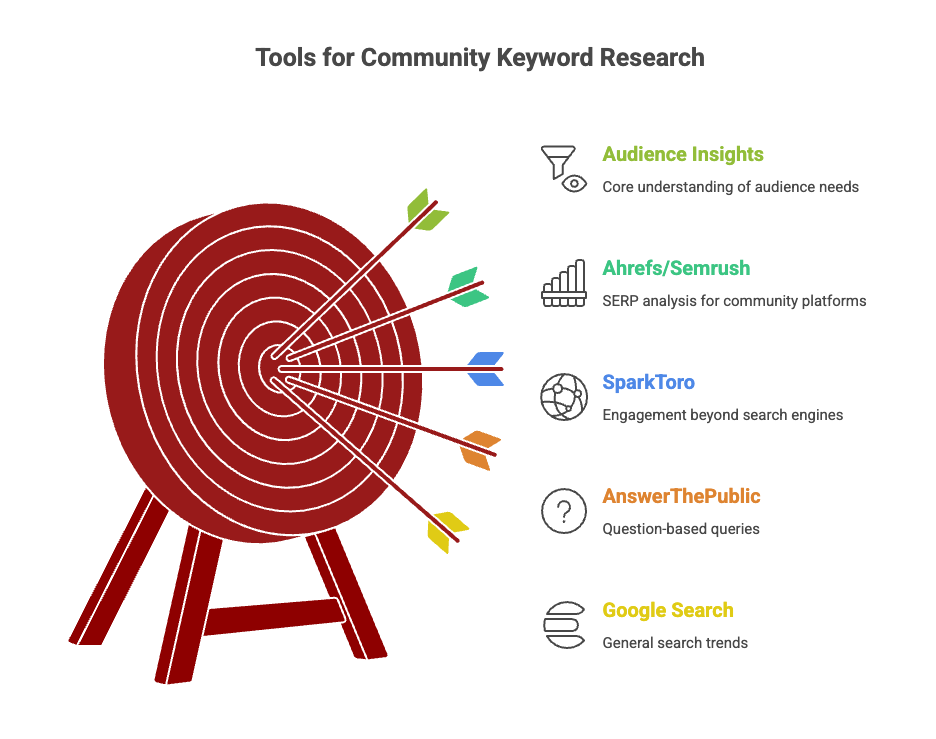
A few tools can help you find what your audience is already discussing:
How to Optimize Community Pages for Search
If you manage a community platform, forum, or even your own discussion threads, a few on-page tactics can help your community content rank better.
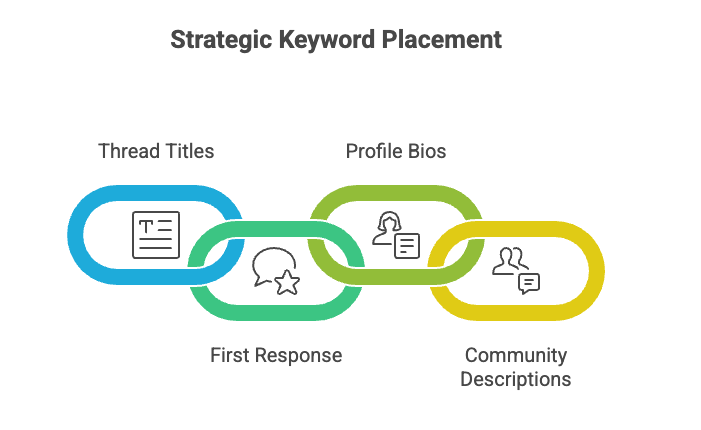
Where to Place Community SEO Keywords
Keywords work best when placed naturally in high-visibility locations:
Optimizing Titles and Meta Descriptions for Community Content
Clear, keyword-rich titles that answer a specific question perform best. “How Toronto small businesses can improve local SEO” will outperform vague titles like “SEO discussion thread” every time.
Structuring Community Pages for Visibility
Search engines parse well-formatted content more easily. Using clear formatting, headers within long posts, and logical organization helps both readers and crawlers follow the structure of your discussions.
Technical SEO for Community Platforms

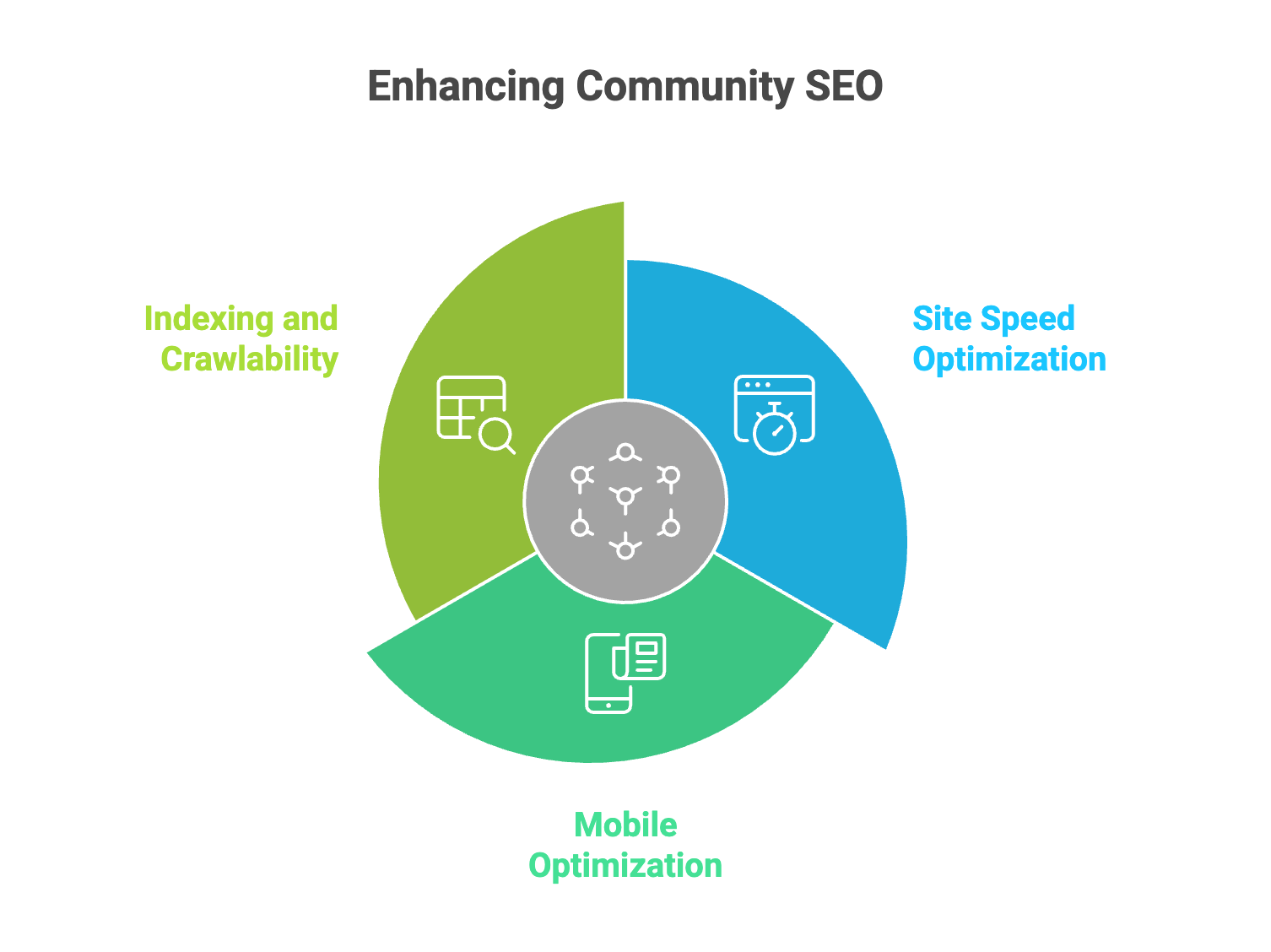
Technical factors affect how well community content gets indexed and ranked, even on platforms you don’t fully control.
Site Speed Optimization for Communities
Slow-loading community pages hurt both rankings and user engagement. If you manage your own forum, improving Core Web Vitals by compressing images and reducing unnecessary scripts can make a noticeable difference.
Mobile Optimization for Community Access
Most community browsing happens on mobile devices. Responsive design isn’t optional at this pointit’s expected by both users and search engines.
Indexing and Crawlability for User-Generated Content
User-generated content can create crawl issues like duplicate content or thin pages. Canonical tags help consolidate authority across similar discussions, while noindex tags can prevent low-value threads from diluting your site’s overall quality signals.
Internal Linking Strategies for Online Communities
Linking between related threads, pinned resources, and category pages helps search engines understand your community’s structure. It also passes authority from high-performing discussions to newer content that hasn’t gained traction yet.
A few practical internal linking opportunities:
How to Create Community Content That Ranks
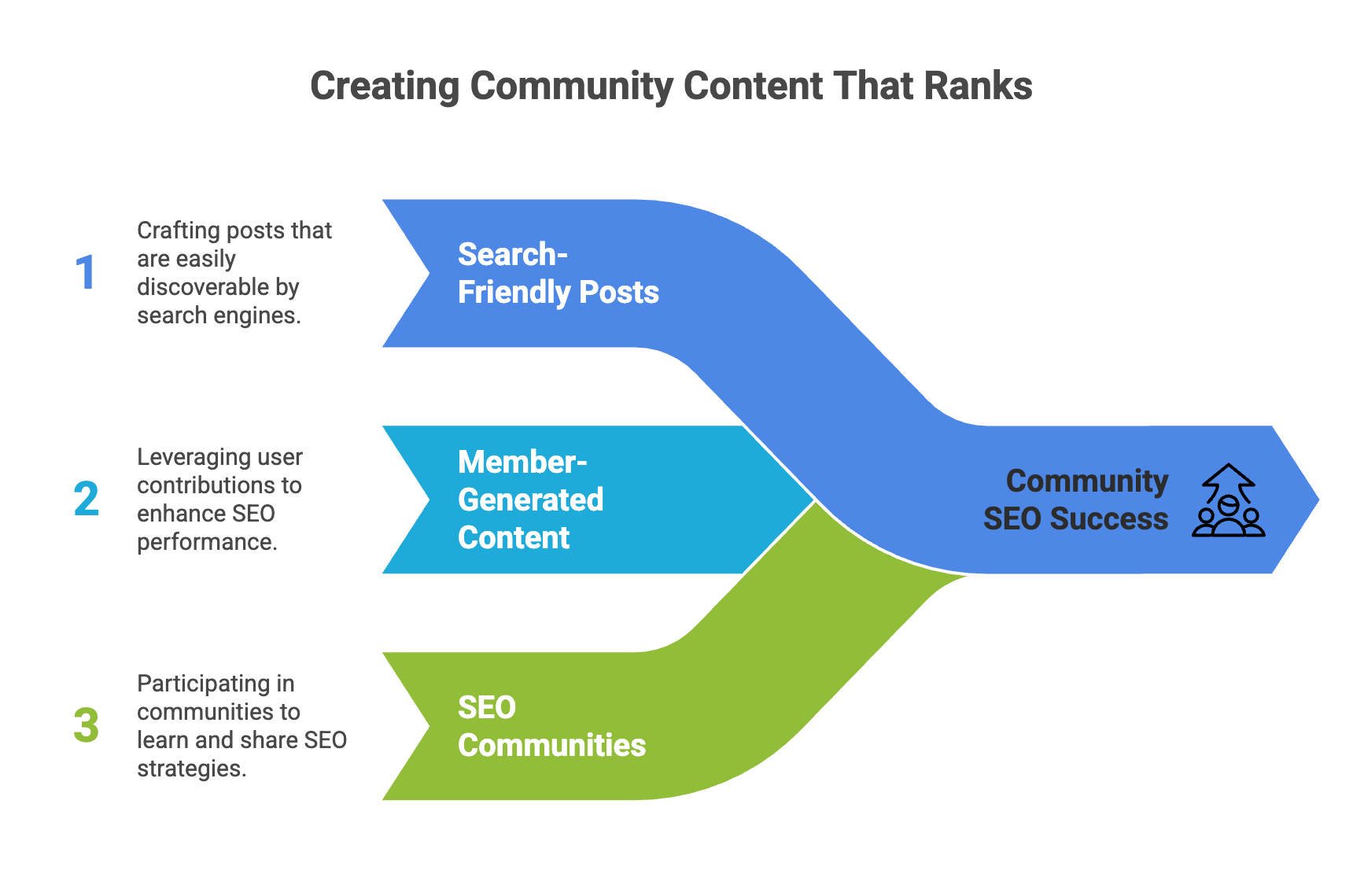
Creating valuable, search-friendly content within communities is the core of community SEO. But the approach differs from traditional content marketing.
Creating Search-Friendly Community Posts
Write posts that directly answer questions, use clear formatting, and include relevant keywords naturally. The key is being genuinely helpful rather than promotional. Communities reward value and tend to punish self-serving content quickly.
How Member-Generated Content Boosts SEO
Active community engagement creates fresh, diverse content that search engines value. More replies and discussions signal relevance, which can push threads higher in search results over time as engagement grows.
Which SEO Communities to Join and Engage
For marketers and business owners looking to learn and participate, a few communities offer particularly strong engagement:
Active participation in spaces like these builds authority and drives referral traffic back to your business over time.
How to Measure Community SEO Performance
Tracking community SEO requires different metrics than traditional SEO. You’re measuring engagement and referral impact, not just rankings.
Essential Metrics for Community SEO
Tools for Tracking Community Search Performance
Common Community SEO Mistakes to Avoid
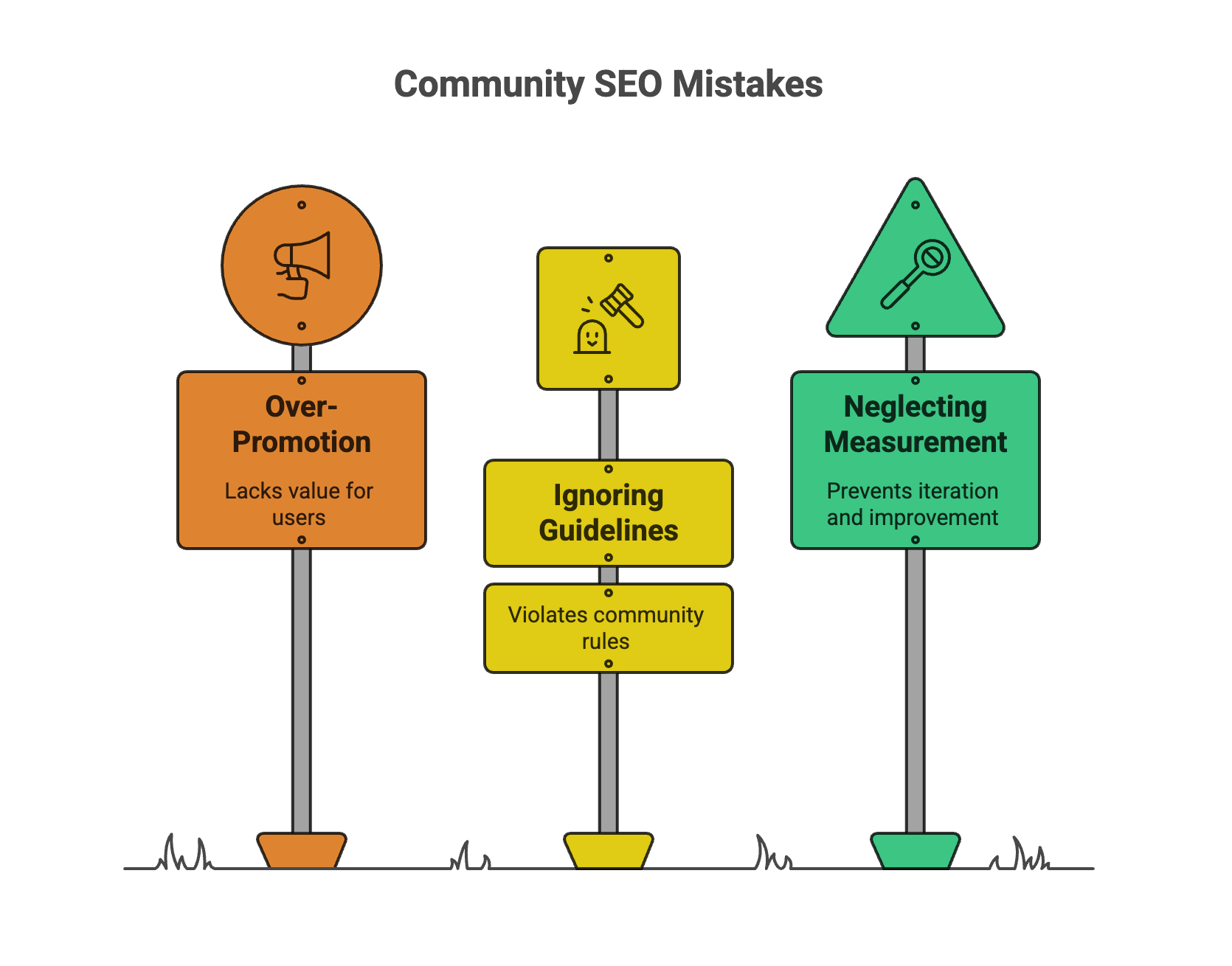
Community SEO backfires when done wrong. Authenticity matters more here than almost anywhere else online.
Over-Promoting Without Adding Value
Blatant self-promotion gets downvoted, removed, or damages brand reputation. Focus on being helpful first, recommendations happen naturally when you provide genuine value to the conversation.
Ignoring Community Guidelines
Each platform has rules, and violating them leads to bans and wasted effort. Reading the guidelines before participating saves time and protects your reputation.
Neglecting Measurement and Iteration
Without tracking, you can’t know what’s working. Ongoing measurement separates businesses that see results from those that give up too early.
How Community SEO Connects to AI Search
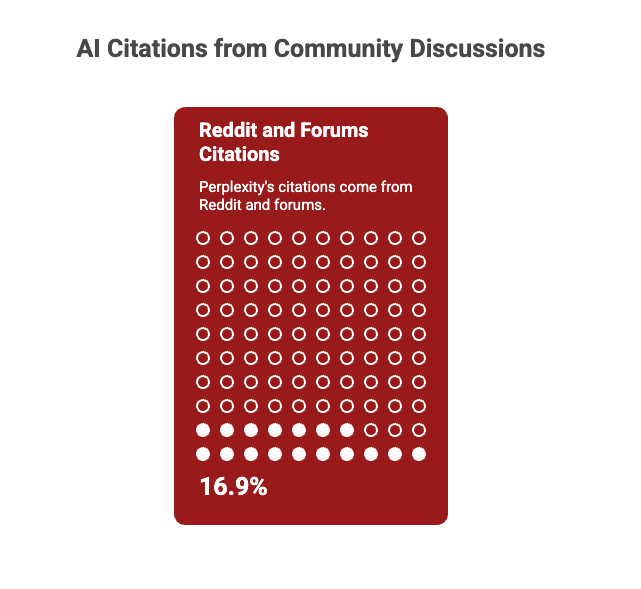
AI tools like ChatGPT, Perplexity, and Google AI Overviews pull from community discussions to form recommendations. When AI tools answer questions about your industry, they often cite Reddit threads, forum posts, and Quora answers. Reddit and forums represent 16.9% of Perplexity’s citations alone.
A strong community presence increases your chances of being cited in AI-generated answers. Brands mentioned on 4+ platforms are 2.8x more likely to appear in ChatGPT. Community SEO and AI search optimization overlap here, both reward authentic, helpful content that answers real questions directly.
Tip: Businesses investing in community SEO today are building the foundation for AI search visibility tomorrow. The same content that ranks in community discussions often gets referenced by AI tools when they generate answers.
How to Optimize for Search and Engage the Community
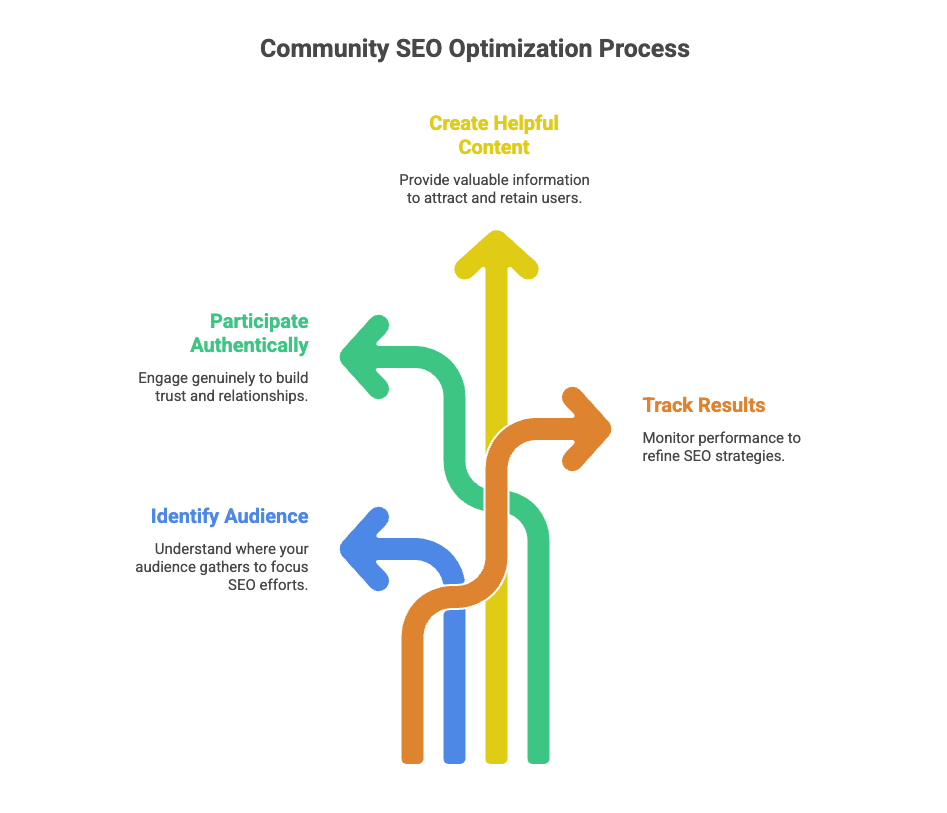
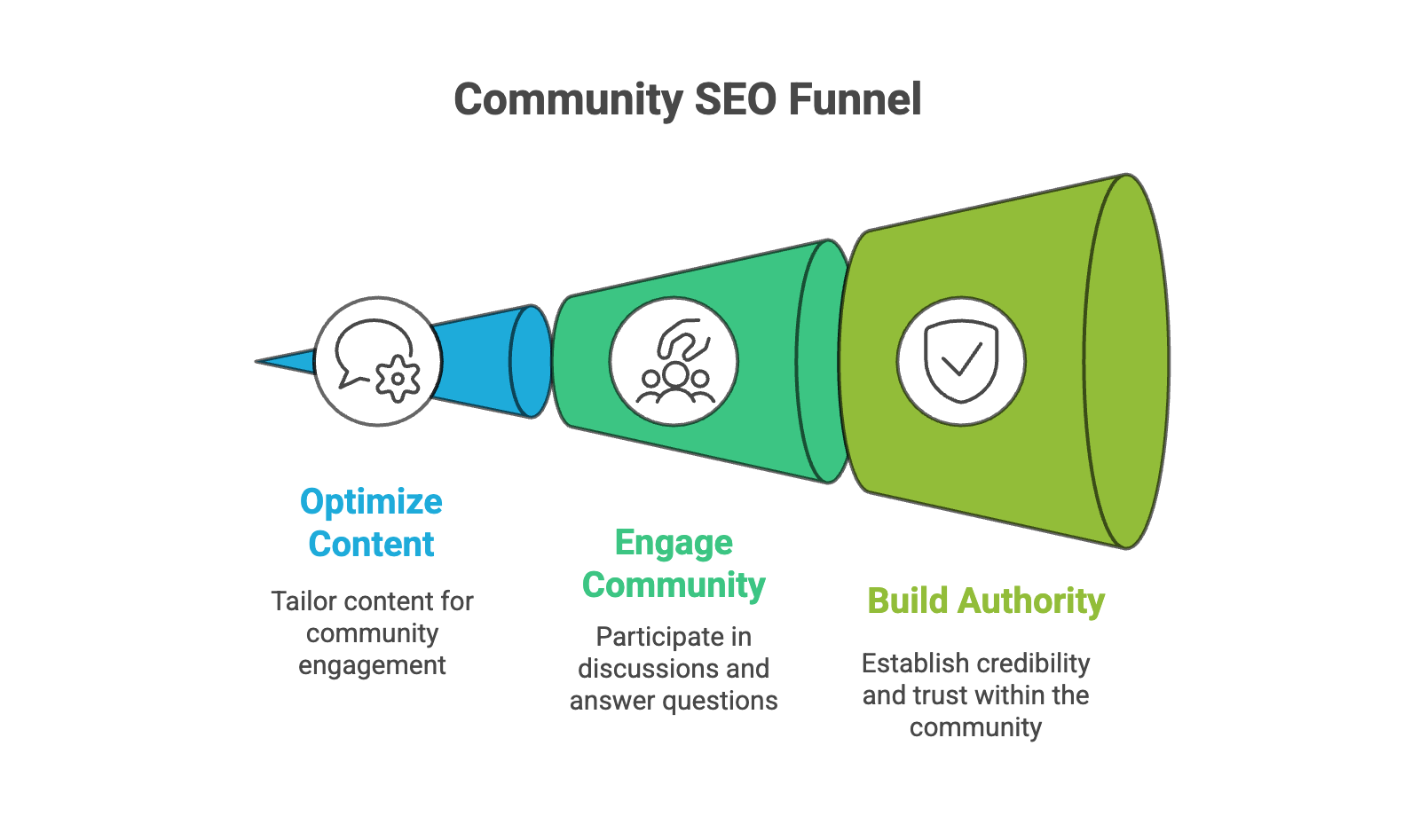
Community SEO comes down to four actions: identify where your audience gathers, participate authentically, create helpful content, and track results.
| Action | Why It Matters |
|---|---|
| Identify relevant communities | Meet your audience where they already search |
| Participate authentically | Build trust and avoid penalties |
| Create search-friendly content | Rank for long-tail community queries |
| Track referral traffic and mentions | Measure ROI and iterate |
| Optimize for AI search | Future-proof your visibility |
The businesses seeing results from community SEO treat it as an ongoing channel rather than a one-time tactic. Consistency matters more than volume. Ready to build visibility across traditional search, community platforms, and AI search? Talk to Digital 6ix about your SEO strategy.
This Blog is written by Simar Singh, Founder of Digital 6ix and a data-driven storyteller with 7+ years of experience helping Toronto businesses grow through performance-led digital strategies. Certified in Google Analytics and Google Search Console, with a strong focus on turning insights into measurable business outcomes.
How long does community SEO take to show results?
Community SEO typically takes several weeks to months as posts gain engagement and get indexed. The timeline mirrors traditional SEO – early efforts compound over time as discussions gain traction and authority.
Does community SEO replace traditional website SEO?
Community SEO complements traditional SEO rather than replacing it. Your website remain the foundation, while community presence adds another visibility channel that captures different search intent.
Which online communities should local businesses prioritize for SEO?
Local Toronto businesses often see the best results from Reddit (especially local subreddits), local Facebook Groups, industry-specific forums, and Google Business Profile Q&A. Starting where your customers already ask questions makes the most sense.
Can small businesses compete in community SEO without dedicated marketing teams?
Small businesses can compete by focusing on one or two communities and participating consistently with helpful, authentic contributions. Quality engagement matters more than volume.
How does participating in SEO communities improve local search rankings?
While direct ranking impact is limited, community engagement drives referral traffic, brand mentions, and trust signals that indirectly support local visibility. The real value is in reaching potential customers during their research phase.