Read Time:

7–11 minutes

Modified Date:

From Content Chaos to SEO Comeback: How a Toronto Film Festival Boosted Pages by 600%


Sometimes growth doesn’t come from adding more, but from having the courage to remove what no longer serves you. Because content isn’t king. Relevant content is.

That’s the lesson this Toronto-based film festival learned in one of our most challenging and rewarding projects at Digital 6ix

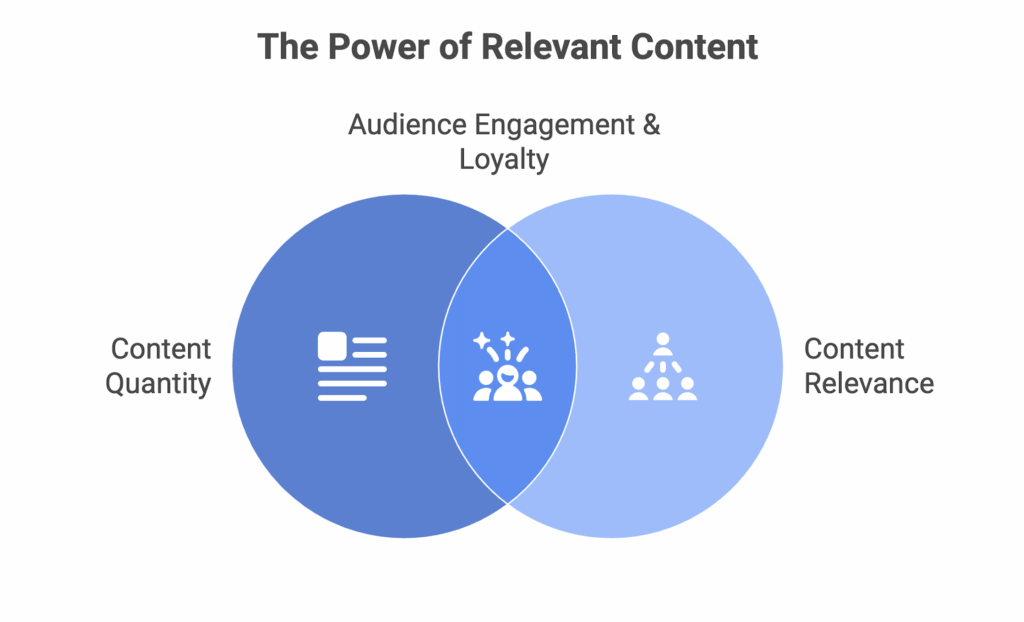
Venn diagram showing Content Quantity and Content Relevance overlapping in the center, labeled Audience Engagement & Loyalty, with the title The Power of Relevant Content
Small Business Marketing Toronto

Case Summary

Client: Toronto-based Film Festival

Industry: Arts, Culture & Events

Timeline: ~6 months

The Challenge:
Website bloated with 435 indexed pages
340 pages generating 0 organic clicks
Only 4 pages driving meaningful traffic
Content focused on volume, not search intent
Declining topical authority and poor rankings

The Strategy:
Content pruning: Removed, de-indexed, or consolidated low-value pages
Semantic SEO framework: Topic clusters, intent mapping, and internal linking
Content ecosystem rebuild: Fewer pages, deeper coverage
Re-ranking phase: Optimize pages ranking positions 4–15 to push into Top 5
Ongoing optimization based on real-time search behaviour

Key Results:
Total pages: 435 → 230 (−205 pages)
0-click pages: 340 → 95
Pages with 100+ clicks/month: 4 → 32 (+600%)
Pages with 1000–5000 clicks/month: 0 → 4
Organic visibility and keyword footprint grew sharply after pruning

Key Takeaway:
SEO growth didn’t come from publishing more content, it came from removing what didn’t serve users, strengthening topical authority, and doubling down on relevance.

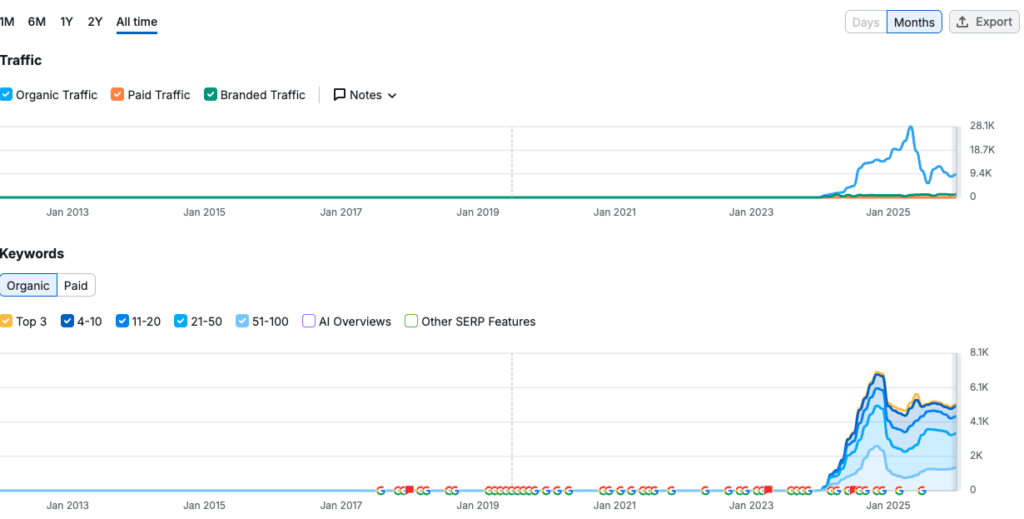
A line graph shows sharp increases in both website traffic and organic keyword rankings starting in early 2023, after years of minimal activity. The top chart tracks traffic; the bottom chart tracks organic keyword positions.
SEMrush Screenshot shows sharp increases in both website traffic and organic keyword rankings.

The Breaking Point: When Content Became Their Weakness

Every year, this film festival draws creatives, critics, and industry leaders to Toronto’s vibrant cultural scene.
But online? Their presence told a different story.

Despite having 435 published pages, the website barely brought in organic traffic that mattered. Blogs were long but lacked structure. Pages existed but weren’t aligned with search intent. Content writers focused on volume, not value and worst of all, the site actively hurt their authority.

When they approached us in September 2024, they weren’t just looking for more page views. They wanted visibility, credibility, and performance. “We’ve already invested so much in our content. Are you saying we have to delete it?”

Yes. And that’s where the story truly begins.

Step 1: The Courage to Prune – Deleting to Grow
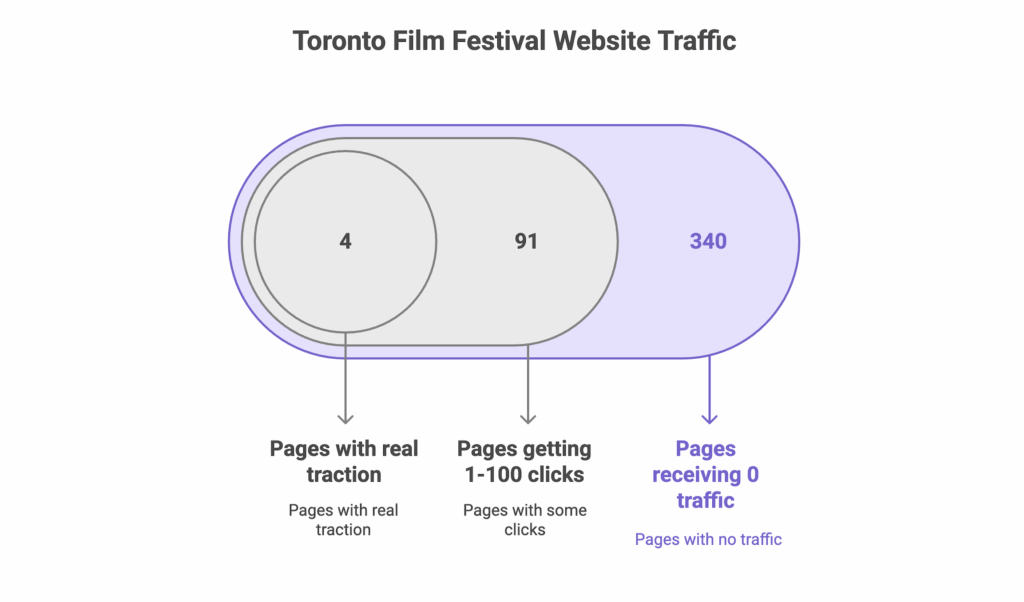
Infographic showing Toronto Film Festival website traffic: 4 pages have real traction, 91 pages get 1-100 clicks, and 340 pages receive zero traffic. Each category is represented with overlapping circles.


During our initial content audit, we found:

Pages receiving 0 traffic340
Pages getting 1–100 clicks91
Pages with any real traction – Just 4

Even worse, most existing pages were diluting topical depth. But convincing them to prune content wasn’t easy.

We said: Think of your website like a film lineup. You wouldn’t showcase every submission just because it exists. You’d curate what moves people. Your website needs that same curation.

They agreed. 50% of pages were de-indexed within the first phase. Focus shifted from quantity to clarity

Content optimization

Step 2: Building a Winning Content Ecosystem (Not Just Writing Posts)
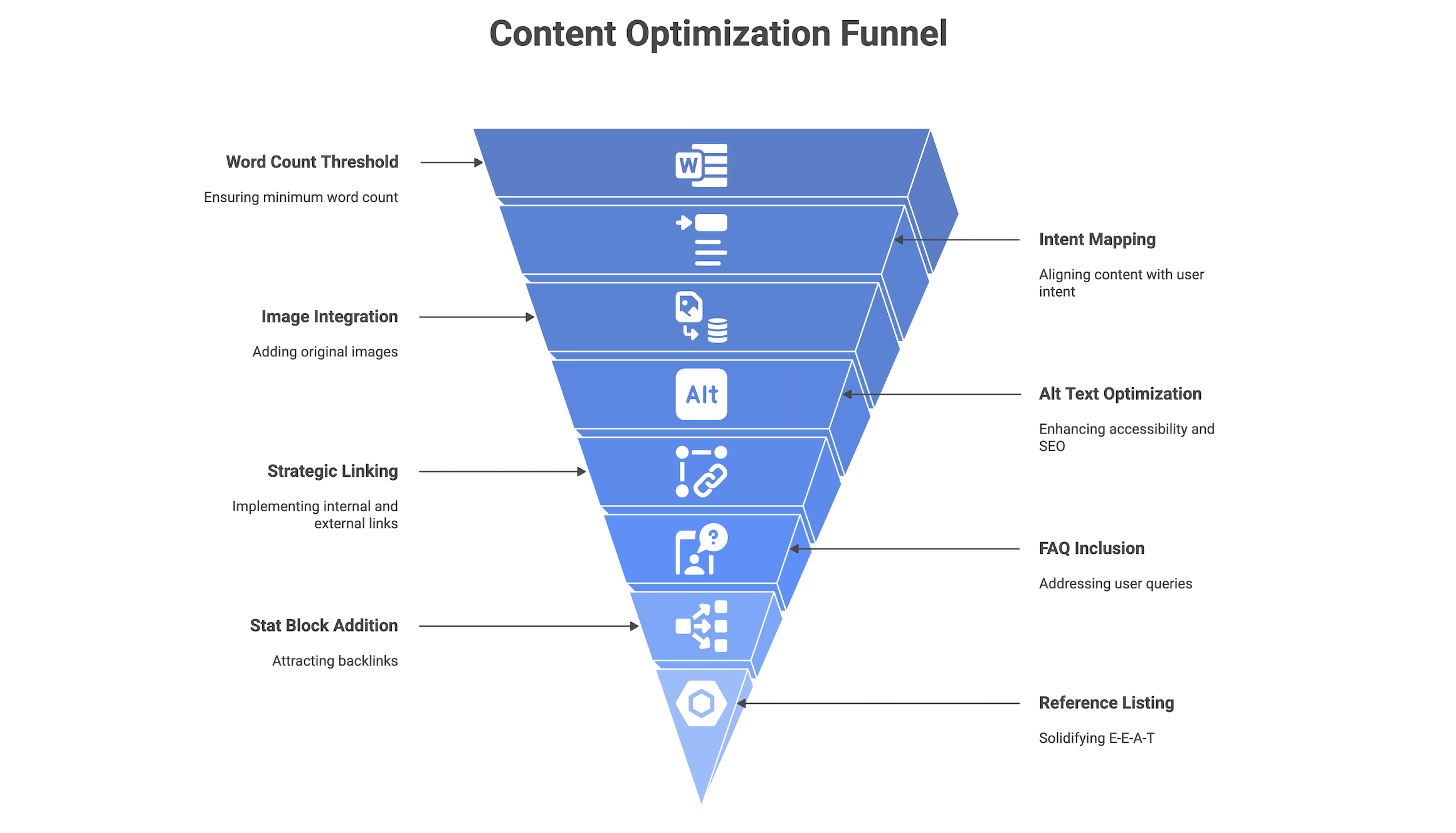
An inverted funnel diagram labeled Content Optimization Funnel for best small business marketing Toronto


We didn’t just write blogs. We engineered high-performing digital assets.

SEO Framework Included:

Minimum word count threshold (but no upper limit, if depth was required)
Logical structure via H1 → H4 hierarchy
Embedded intent-mapping using real-time SERP insights
5+ original images per 1,000 words
Descriptive alt text for accessibility and image ranking
Strategic internal + external linking
FAQ sections based on “People Also Ask”
Stat blocks for backlink attraction
Reference lists to solidify E-E-A-T

We applied Semantic SEO focusing on topic relationships rather than keyword stuffing. Instead of “write for Google”, our approach was:

“Write as if a filmmaker is searching for answers and Google is overhearing the conversation.”

Step 3: Optimizing Again (The Re-Ranking Phase)


We published. We waited. Then we strategically rewrote.

After 30 days, we reviewed pages ranking between positions 4 and 15. These pages weren’t failing, they were almost winning. So, we added:

Additional FAQs matching new trending questions
More contextual insights from competing pages
Updated stats and industry mentions
Second wave linking from freshly published pages

This single step alone pushed multiple blogs into Top 5 SERP positions.

The Turning Point: Data Meets Discipline
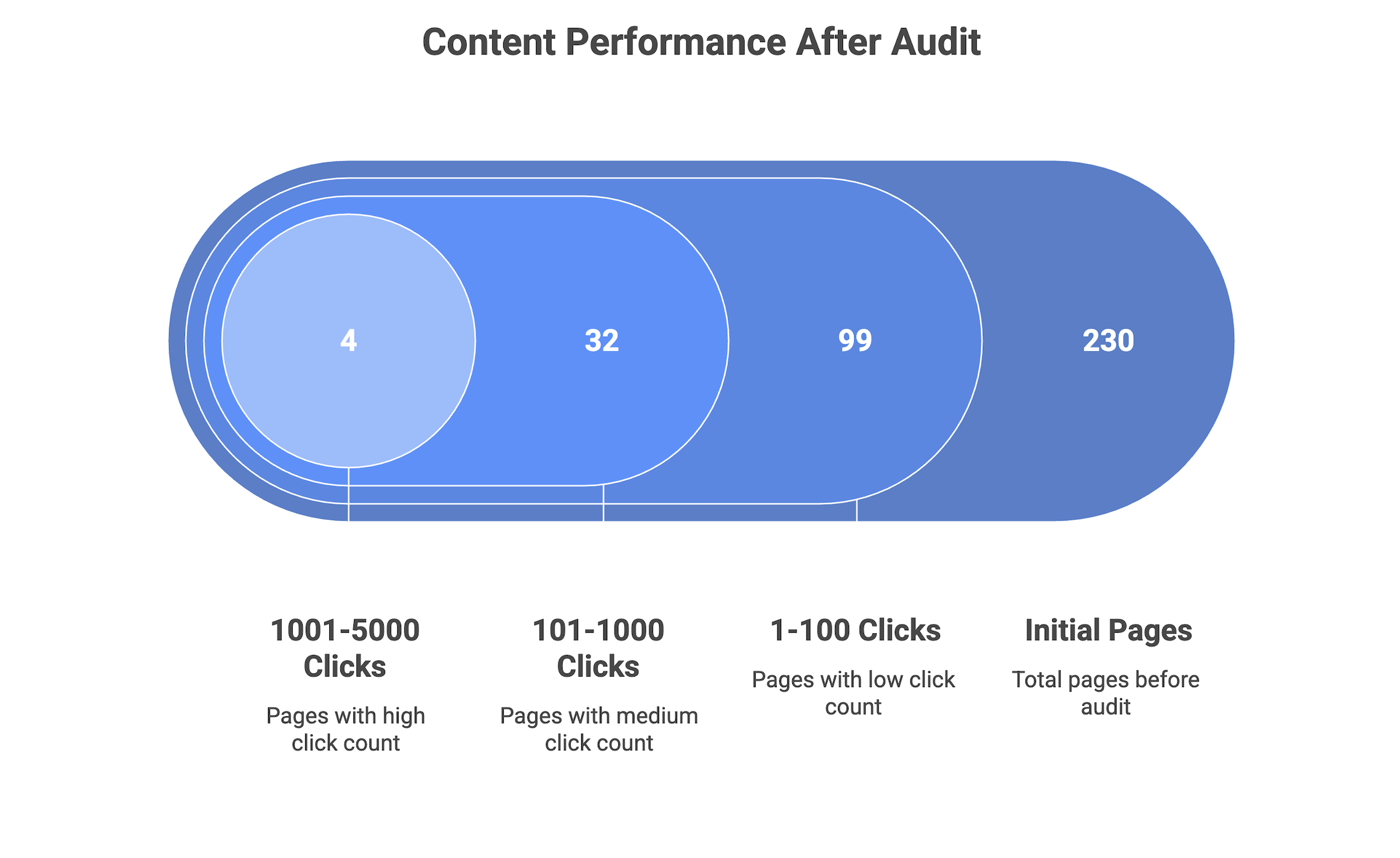
A horizontal, rounded bar chart shows content performance after audit: 4 pages with 1001–5000 clicks, 32 pages with 101–1000 clicks, 99 pages with 1–100 clicks, and 230 total initial pages before the audit.


We didn’t scale output – instead, we deepened impact.
Before (435 Pages) Vs After Audit (230 Pages)

340 pages = 0 clicks vs 95 pages = 0 clicks
91 pages = 1–100 clicks vs 99 pages = 1–100 clicks
4 pages = 101–1000 clicks vs 32 pages = 101–1000 clicks
0 pages = 1001+ clicks vs 4 pages = 1001–5000 clicks

Result: 600% increase in high-performing pages (100+ clicks per month)
Timeline: 6 months
Total content reduced: 205 pages

SEO Results: Before vs After Content Strategy (6-Month Comparison)
SEO Metric Before Strategy After Strategy (6 Months)
Total indexed pages 435 pages 230 pages
Pages receiving 0 organic clicks 340 pages 95 pages
Pages receiving 1–100 organic clicks 91 pages 99 pages
Pages receiving 101–1000 organic clicks 4 pages 32 pages
Pages receiving 1001–5000 organic clicks 0 pages 4 pages
Pages receiving 100+ organic clicks per month 4 pages 32 pages (+600%)
Content approach High volume, low intent alignment Reduced volume, intent-aligned content
Primary SEO action Publishing new pages Pruning, consolidation, re-optimization
Measured timeframe Pre-strategy baseline 6 months post-implementation

Data source: Google Search Console (page-level organic clicks and performance).

Are you publishing content that gets ignored by Google and by your audience?

Let’s talk about what your website is really trying to say and how we can make the world listen. Book a free 15-minute SEO clarity call

The Psychology Behind This Win

Google rewards depth over breadth. Users respond to clarity over complexity. Websites grow when they prioritize topical authority. And sometimes, the biggest leap forward starts with letting go.

“In filmmaking, every great story has a moment where something is left behind. In SEO, that moment is content pruning.”

The Final Takeaways

A diagram titled SEO Optimization Process shows four stacked layers with icons and labels: Content Pruning, Structure Optimization, Real-Time Optimization, and Educational Focus. People icons appear on each layer.


Don’t be afraid to remove existing content
Structure & intent > word count
Re-optimize based on real-time search behaviour
Use content to educate first, rank second
SEO is not a one-time effort, it’s an ongoing narrative

At Digital 6ix, we don’t write content. We build ranking machines.

Get your free content audit now.

Frequently Asked Questions

Leave a Comment

Your email address will not be published. Required fields are marked *

1 thought on “600% increase in the number of pages getting more than 100 organic clicks per month”

  1. Simply wish to say your article is as amazing The clearness in your post is just nice and i could assume youre an expert on this subject Well with your permission let me to grab your feed to keep updated with forthcoming post Thanks a million and please carry on the gratifying work.